Centennial, CO · Garage Door Service
Castle Pines homes mostly date to the early 2000s, not the 1970s stock common elsewhere in our service area. Here's how that changes the repair, the parts, and the job.
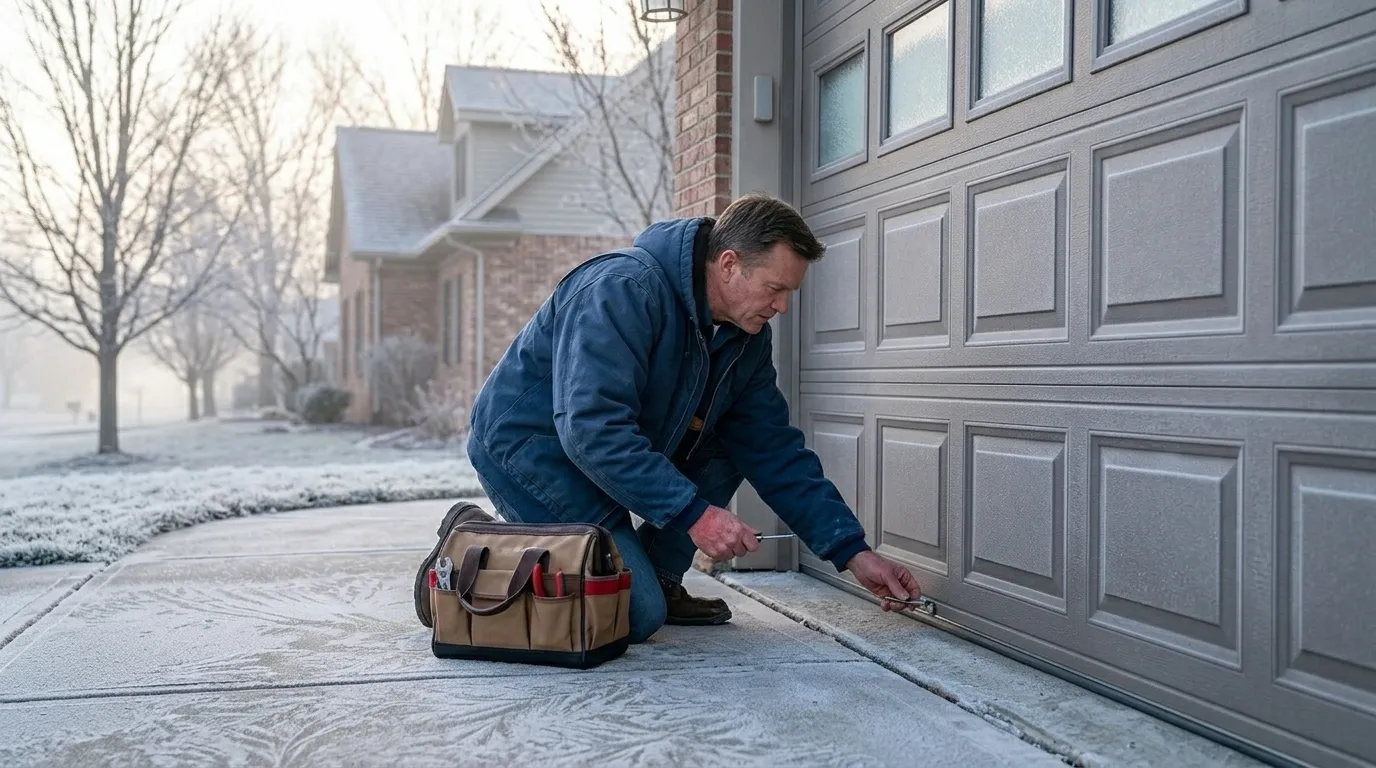
Castle Pines is one of the newer parts of our service area. The median home here was built around 2003, decades past the 1978 median across the rest of the territory we cover out of Centennial. That gap matters more than it sounds like it should. A door installed in 2003 or later almost always came with a standard torsion spring setup, factory-balanced steel or composite panels, and a mid-weight opener rated for that hardware. The failures we see out here tend to be wear failures, not mismatch failures: a spring that's simply logged its cycle count, a roller that's worn its bearing out, a cable that's frayed from years of the same motion, repeated a few thousand times too many. What we don't see much of is the kind of jury-rigged hardware you find on a house that's been through three owners and two off-brand opener swaps since the Carter administration. Newer stock, more predictable failure. That's the short version, and it's also why the diagnosis on a Castle Pines call usually goes faster than it does on an older block.
The main complication with Castle Pines isn't the door, it's the drive. We're routing a truck 9 miles out from Centennial for every call, which means we're not treating this like a walk-around-the-corner job. We plan the trip, we load the parts we expect to need based on what you tell us on the phone, and we don't double back for a part we guessed wrong on if we can help it. The other wrinkle: this area sits in a cold-and-severe winter climate zone same as the rest of the territory, so even a newer door here can get a spring that's gone brittle faster than the manual predicted, or an opener sensor that's iced up and reading a false obstruction. Cold doesn't care how new your house is. It just cares about steel fatigue and lubricant viscosity, and those don't check your build year.
A straightforward spring or cable job on a 2000s-era door usually goes fast once we're on site, because the hardware is standard and we're not hunting for a part that hasn't been made since the doors themselves went out of production. Where the time goes is the drive, not the driveway. Because we're covering this from Centennial and Castle Pines sits at the outer edge of a wider service radius, we build the trip into the schedule rather than treating it as a drop-in. If you need same-day service, say so when you call and we'll tell you honestly whether that's realistic for the day you're asking about, instead of promising a window we can't hit.
We don't have a published price list to hand you here, and quoting one without seeing the door would be a guess dressed up as a fact. What we can tell you is that the parts side of a repair on a 2003-era door tends to run at standard rates, since the hardware is common rather than a discontinued or oddball size. The other piece worth knowing: household income in Castle Pines runs well above the broader service area, and higher-end opener and insulated-panel upgrades are things we quote more often out here than we do closer in. If that's the direction you're leaning, ask for both the repair number and the replacement number on the same visit so you can compare them side by side.
A torsion spring under load can put someone in the hospital, and that's true whether the house is from 1978 or 2003. We don't recommend touching the spring, the cable, or anything holding tension yourself, full stop. Where a homeowner can reasonably do their own work: swapping a worn weatherstrip, tightening loose hinge bolts, cleaning and lubing tracks, or replacing a photo-eye sensor that's just dirty rather than damaged. If the door won't move, moves unevenly, or the opener is grinding, that's a call, not a project. We'd rather tell you it's a five-minute fix over the phone than have you pay us to show up for one.
For newer-build doors like most of what's in Castle Pines, we stock standard torsion springs, common roller and hinge sizes, and openers in the mid-weight range that match what a 2000s-era door typically needs. What we don't keep on the truck is anything specialty or discontinued, because that's not the profile of hardware out here. If your door turns out to have a nonstandard opener or an aftermarket panel someone swapped in later, that's the one case where we may need to order a part rather than fix it on the first visit, and we'll tell you that up front instead of after we've already opened the panel.
Because the housing is different. Most of the wider territory we cover from Centennial has a median build year around 1978, but Castle Pines runs closer to 2003. Newer doors fail differently than older ones, need different parts, and usually diagnose faster, so the job here looks different even though the company and the truck are the same.
No. We run this call out of Centennial, about 9 miles away. We don't have a branch or depot in Castle Pines, so we plan the trip as part of scheduling rather than treating it as a same-hour drop-by.
That depends entirely on the door and who installed it, and we don't have that information without seeing the unit and its paperwork. We can tell you what's failed and what it'll cost to fix, but any warranty question needs to go through whatever documentation came with the original install.
Cold affects steel and lubricant regardless of build year. A 2003 door isn't immune to a spring going brittle in a hard winter or a sensor icing over. The advantage of a newer door is that the rest of the hardware is standard, so when something does fail, we're not also fighting an obsolete part.
Call now or request a free quote - same-day service on most repairs, upfront written pricing.