Centennial, CO · Garage Door Service
Garage door opener installation for Centennial, CO homes built between 1938 and 2005. We match the unit to your door, your garage, and Colorado's cold winters.
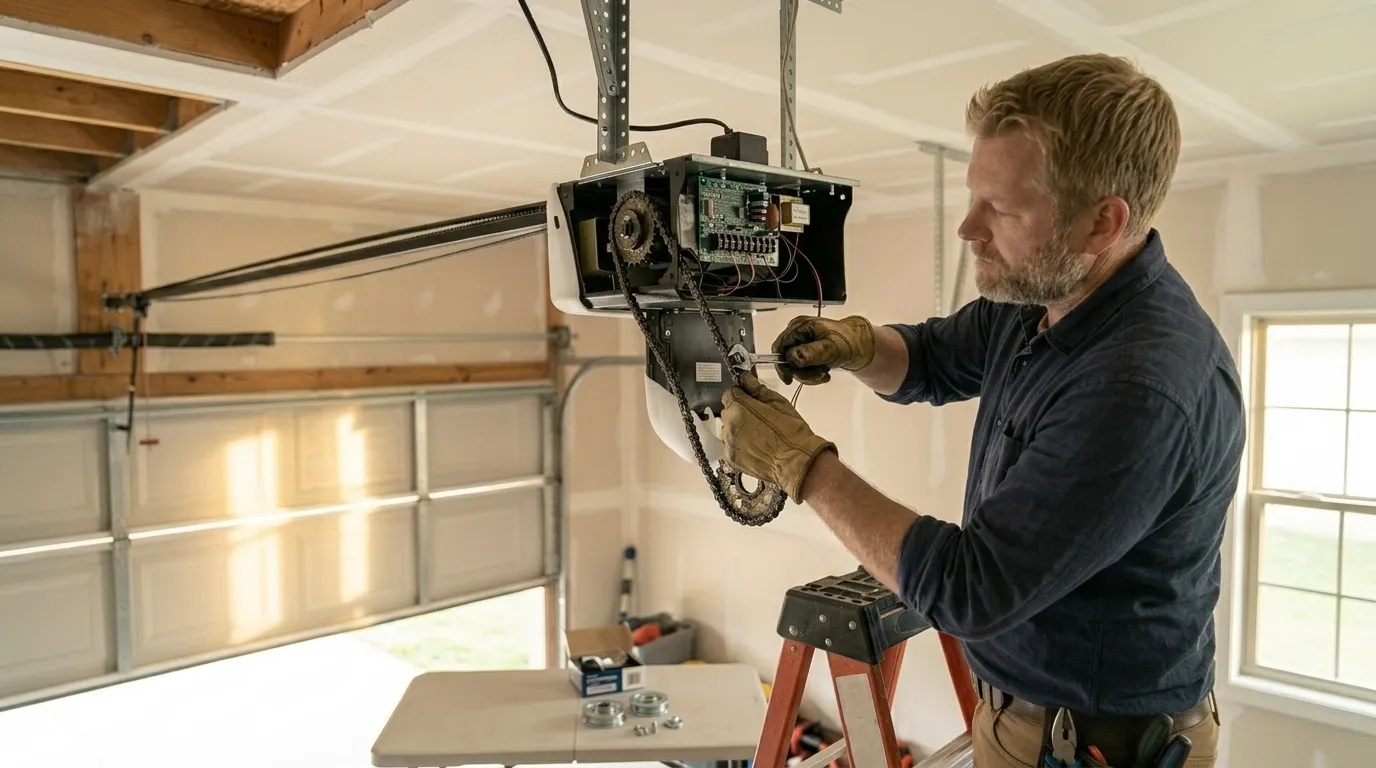
The opener runs but the door barely moves, or it moves and then reverses halfway up. Sometimes it's a grinding motor that used to be quiet. Sometimes it's a remote that used to work from the driveway and now only works standing next to the unit. A few homeowners call because the opener flat out died overnight - no light, no hum, nothing.
These aren't separate problems. They're the same opener aging out, showing symptoms in a different order depending on which part failed first: the gear, the circuit board, the drive belt or chain, or the logic board that reads the safety sensors. On a lot of Centennial garages, the opener isn't the original part on the door - it's a second or third replacement bolted onto hardware that's older than the motor driving it.
We get calls at every stage of this. The ones we like least are the ones where the owner kept resetting the breaker for six months before calling, because by then the board is usually gone too, and what could've been a straightforward swap turns into diagnosing what else got fried on the way down.
Centennial's housing stock runs from 1938 to 2005, with the median home built in 1978, and most of it clusters in the 1960s and 70s build wave. That matters for openers specifically: a house built in that window usually got its opener as a retrofit, not a factory install, wired into a garage ceiling that wasn't planned around it. The bracket spacing, the header clearance, the rail angle - all of it was worked out in the field, which means replacements later don't always drop in clean.
The climate does its own damage. Centennial sits in a cold, severe climate band, and that means real freeze-thaw cycles every winter. Cold makes grease in the gearbox stiffen, chain tension tighten, and plastic drive gears - the ones designed to strip before the motor burns out - crack under load they'd shrug off in summer. An opener that's been fine for years can suddenly struggle the first hard cold snap, because the slack it had in October is gone in January.
Add in age: an opener installed when a house was resold in the 80s or 90s is now 30-plus years old, well past any manufacturer's expected service life, regardless of how well it's been maintained.
Installation starts with the door, not the opener. We check spring balance and track alignment first, because an opener bolted onto a door that's out of balance will fail again no matter how good the unit is - the motor just ends up doing the spring's job. If the door's fine, we move to the header: on older Centennial garages that means confirming there's solid framing to mount to, since some retrofit garages never got proper blocking.
From there it's matching drive type to the door and household. Chain drives are cheaper and tougher for heavier doors. Belt drives run quieter, which matters if there's a bedroom over or next to the garage - common in this housing stock. We wire in a battery backup on request, which matters more here than in a lot of places given the winter storm pattern that knocks out power along with everything else.
We also swap the safety sensors as part of the job, not just the head unit. Old sensors are the single most common cause of a 'new' opener that reverses randomly in its first month - they look fine but the eye alignment has drifted with the door itself over the years.
A box-store opener kit looks simple, and for a garage that's square, level, and built with the bracket points a manufacturer expects, it mostly is. The trouble is matching that description to a garage retrofitted decades ago. Get the travel limits wrong and the door either won't seal at the floor - letting cold air straight into the garage - or it keeps hitting the frame and grinding the gear down within weeks.
We won't tell you it's impossible. It's not. What we will say honestly: the part that actually causes callbacks isn't the wiring, it's the mechanical setup - force adjustment, travel limits, sensor alignment - and that's the part most kits assume you'll get right on the first try. If your door and header are standard and you're comfortable on a ladder with a multimeter, a DIY install can hold up fine.
Where we'd push back is anything involving the spring system. If the existing springs are original to a house built decades back, replacing the opener without addressing tired springs just moves the failure point - now it's the new opener straining against old springs instead of old ones.
We don't have a fixed number to give you here - it depends on whether the header and wiring are ready to go or need work first, which is common in Centennial's older retrofit garages. What we can say is the door and bracket condition get checked before the opener goes in, not after.
It's not required, but given the cold, severe winter pattern here and the outages that come with bad storms, a lot of owners choose it so the door still opens if the power goes out. It's an add-on option, not something bundled into every install by default.
Usually yes, but the door has to be in balance first. An opener paired with a door that's out of balance - common on older Centennial hardware - just burns itself out doing the spring's job. We check that before quoting the opener itself.
Cold stiffens gearbox grease and tightens chain tension, and older plastic drive gears crack under that extra load. It's a common failure pattern in this climate band, especially on units already past their expected service life.
By Neighborhood
We also handle opener installation in these Centennial-area suburbs.
Call now or request a free quote - same-day service on most repairs, upfront written pricing.