Centennial, CO · Garage Door Service
Garage door off track in Centennial? Cold-weather hardware fatigue and 1960s-70s tract construction are common causes here. We diagnose and fix it right.
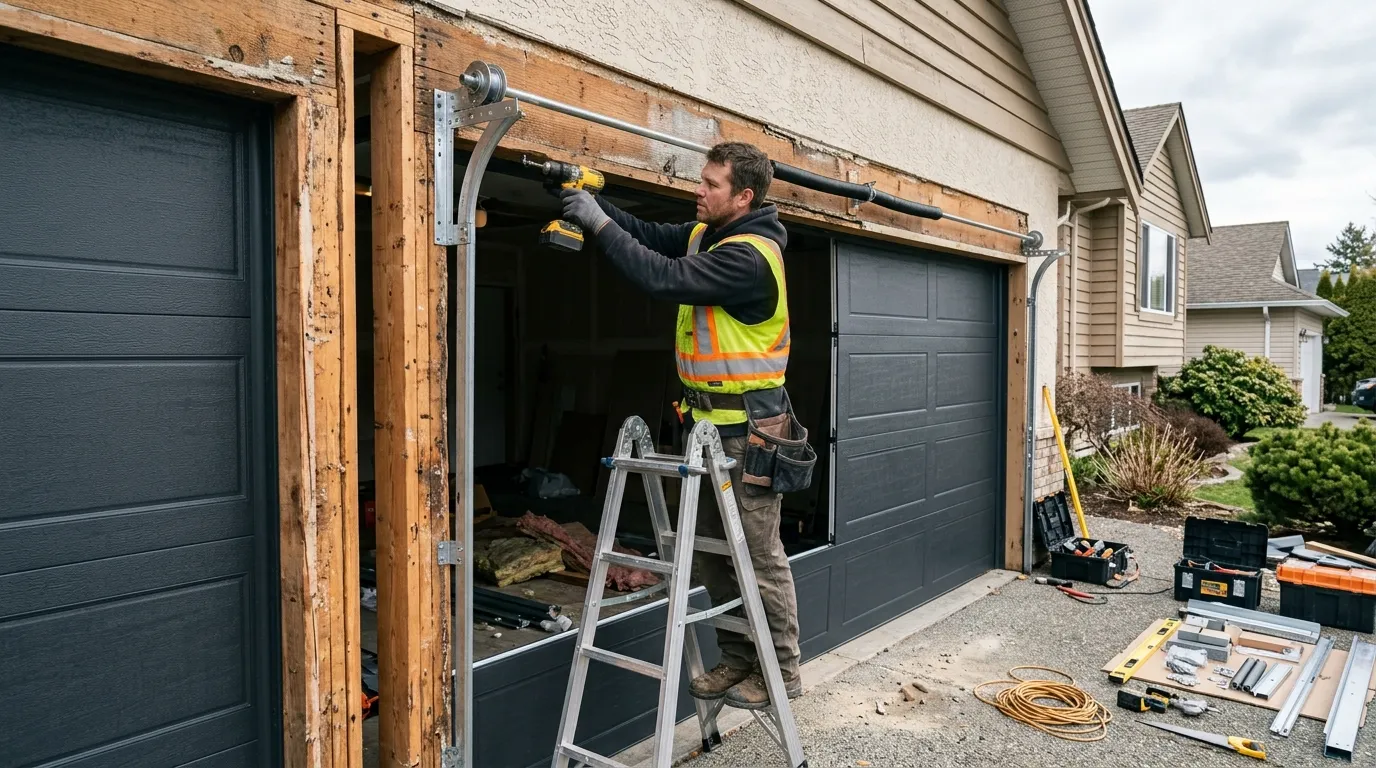
A door off its track doesn't always look dramatic. Sometimes it's a panel hanging crooked at one corner, a roller sitting outside the rail, or the door jamming halfway down and refusing to move either direction. Other times it's worse: the door has come clean out of the track on one side and is leaning against the frame, cable slack, opener straining against dead weight.
What all of these have in common is a track that's no longer holding the roller where it belongs, whether from a bent rail, a broken bracket, or a roller that's worn down and jumped the groove. It's not something to force back into place by hand or run the opener through repeatedly - that's how a bent track becomes a torn-off bracket, and a torn-off bracket becomes a door that comes down on a car or a foot.
Across the Centennial service area, this is one of the calls we get most, and it's rarely random. The homes here have specific reasons the tracks fail the way they do, which we get into next.
Housing stock across this service area runs from 1938 to 2005, with the median build year around 1978 and most of the 30 named communities we cover built up through the 1960s and '70s. That generation of garage doors and track hardware is now decades past its design life. Steel brackets rust and loosen at the studs, track sections that were installed slightly out of plumb finally give, and original rollers - often steel, not nylon - wear grooves into rails that were never replaced when the door itself was.
The other factor is climate. This is a severe cold band, and track hardware takes a beating from repeated freeze-thaw cycling. Lag bolts holding brackets to the jamb work loose as wood shrinks and swells through winter. Track alignment that was fine in October can be off by spring, especially on doors that already have some age on the rollers.
Put those two together - 1960s-70s hardware nearing the end of its service life, in a climate that stresses fasteners and metal all winter - and an off-track door isn't a fluke. It's what happens to a garage door in this kind of housing, in this kind of winter, once enough seasons have gone by.
First we look at why it came off, not just where. A single bent roller track from a car bumper is a different repair than a bracket that's pulled loose from rotted jamb wood, and treating them the same gets you a callback in a month.
For a track that's bent but the bracket and jamb are sound, we can often straighten or replace the affected section, re-set the rollers, and check the door balance before we leave. If the bracket has torn loose, we re-anchor it into solid wood or add blocking if the jamb's degraded - that's a longer job and worth doing right the first time.
We also check the springs and cable while we're in there. A door that's fighting bad track alignment puts extra load on the spring system, and if that's been going on for a while, the spring might be closer to failure than the track ever was. No point fixing one and having the other let go two weeks later.
One limitation worth stating plainly: if the track has pulled away from rot or long-term water damage in the jamb, that's a carpentry problem before it's a garage door problem, and we'll tell you that instead of bolting new hardware to bad wood.
Some of this you can check yourself before calling anyone. Look at the track for obvious bends, check whether the brackets are still tight to the jamb, and see if the rollers are still seated in the groove rather than riding on the edge of it. If the door is only slightly out of line and the opener isn't straining, that's useful information to give whoever comes out.
What you shouldn't do is try to force the door back onto the track yourself, especially on a door with torsion springs overhead. Those springs hold real tension, and a door that's already off track has already shown you its hardware isn't behaving the way it should. Hand pressure on a jammed panel, or running the opener against resistance, is how a bad day gets worse.
If the door came off the track because of a specific impact - a car, a stored bike, something obvious - that's a straightforward call. If it happened gradually with no clear cause, that's usually the older-hardware, cold-climate wear pattern common to this area's housing stock, and it's worth having someone look at the whole system, not just push the door back where it was.
Cold-weather freeze-thaw cycling loosens the lag bolts holding track brackets to the jamb, and on homes built in the 1960s-70s wave that's common across this area, the hardware is old enough that it doesn't take much movement to shift a bracket or bend a rail.
No. If the door has torsion springs, they're under real tension and a door that's already off track has already shown a hardware problem. Forcing it by hand or with the opener risks a panel coming down or a bracket tearing loose entirely.
Not always. Sometimes the track is fine but a roller has worn down enough to jump the groove, or a bracket has pulled out of rotted jamb wood. We check all three before deciding what to fix.
There's no fixed age, but original hardware from the 1960s-70s construction wave common in this area, combined with severe cold winters, is the pattern we see most often leading to off-track doors.
By Neighborhood
We also handle off track repair in these Centennial-area suburbs.
Call now or request a free quote - same-day service on most repairs, upfront written pricing.