Centennial, CO · Garage Door Service
Columbine homes date mostly to 1976, built with steel rollers on steel track. We drive out from Centennial with the right roller sets for that era's hardware.
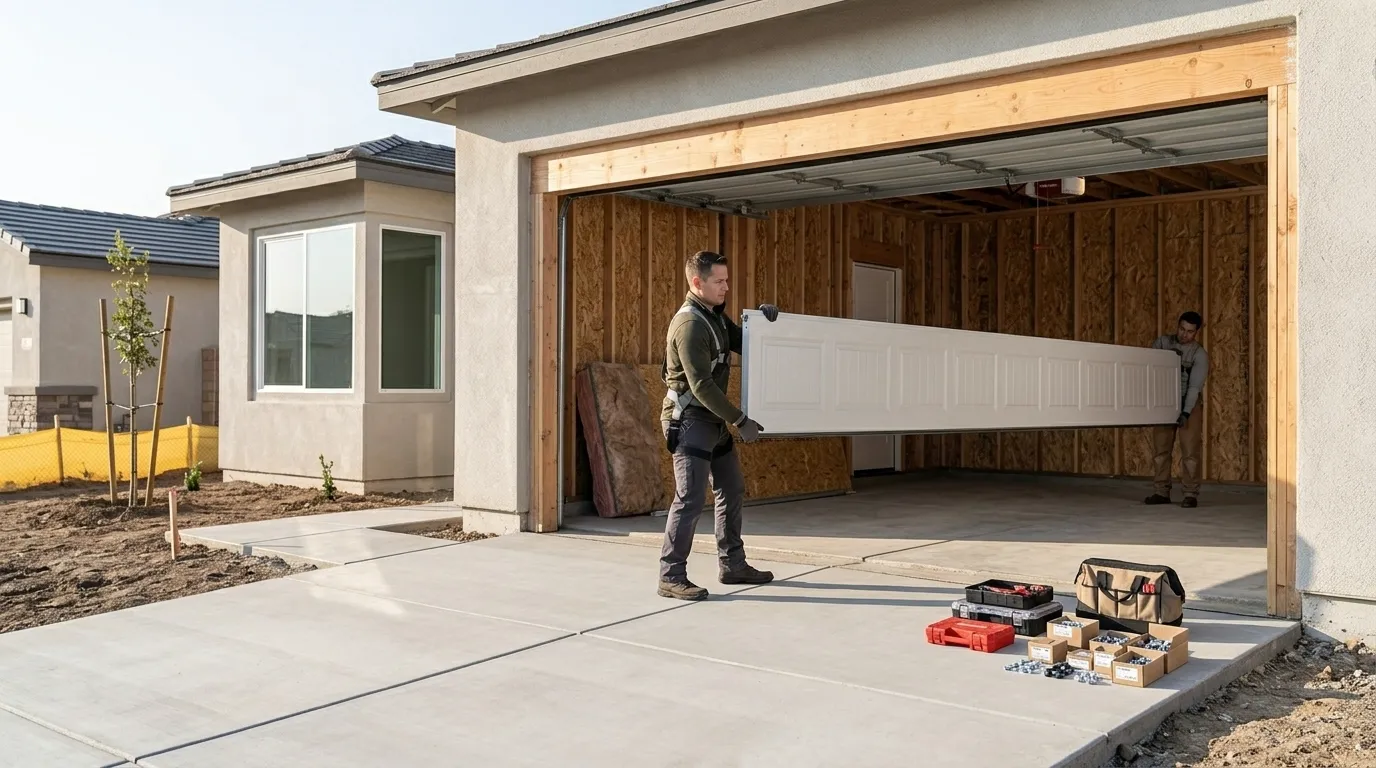
Most houses in Columbine went up around 1976, which puts the original garage door hardware squarely in the steel-roller-on-steel-track era. Nylon rollers weren't standard equipment yet, so if your door has never been touched, you're running on the same style of roller that came with the house. That hardware doesn't fail quietly. You get a grinding or clacking sound as the door travels, worse on the top few feet of track where the roller carries more load coming off the curve. Some owners notice the door jerks at that same spot every single cycle - that's a flat-spotted roller catching on the same worn patch of track, not a spring problem. If the noise is a single loud bang instead, that's a different repair, not a roller issue. Cold mornings make the steel-on-steel setup worse: the factory grease thickens and the door drags until it warms up, which owners sometimes mistake for an opener weakening. It isn't. It's the rollers telling you their bearings are shot.
You can replace rollers yourself if the door is off its track balance-wise and you're comfortable working near a wound torsion spring - but that's the honest limit. The bottom rollers, away from the spring, are a reasonable weekend job: release the door, slide the old roller stem out of the bracket, drop the new one in. The top rollers are a different matter, because they sit close to the cable drum and the spring is still under tension the whole time you're working. We won't talk you out of the bottom two if you're handy, but we won't pretend the top rollers are a casual swap either. If your door is original to a 1976 build and has never had track work, expect the track itself to be worn to match the old roller diameter - which means new rollers alone sometimes won't quiet things down, and that's worth knowing before you buy parts twice.
We carry both galvanized steel rollers and nylon replacements on the truck, because a house built in the mid-1970s in Columbine can have either by now depending on whether anyone's touched the door since. Steel rollers are original-spec for that era and cheaper, but they're also the loud, cold-stiffening kind described above. Nylon rollers with sealed bearings run quieter and don't need the same lubrication schedule, which matters more here than it would in a milder climate - this region sits in a severe cold band, and grease behavior changes a lot between a 30-degree morning and a 90-degree afternoon. We stock both 7-inch and 10-inch stem lengths since track setups from that build period aren't all identical. What we don't stock is anything custom-length - if a previous owner modified the track, that's a special order and we'll tell you up front instead of guessing.
The complication in Columbine isn't usually the roller - it's what the roller has been riding on for close to fifty years. Steel track from a 1976 install develops a wear groove that matches the old roller's exact wear pattern. Drop in a fresh roller with a slightly different profile and it can bind in that groove instead of rolling smooth, which shows up as a new noise that wasn't there with the old, worn-out roller. We check track wear before we quote roller work, not after. Median household income in this part of the service area runs higher than the Centennial-wide figure, and we see more owners here opt for the full nylon upgrade rather than a like-for-like steel swap - that's a choice, not something we push. One honest limit: if the track itself is bent or badly grooved, roller replacement alone won't fix the noise, and we'll say so instead of selling rollers that won't solve it.
Original steel rollers from houses built around the mid-1970s use plain bearings packed with grease that thickens as temperatures drop. This area sits in a severe cold climate band, so that stiffening is more noticeable here than in a milder region. The door drags until the grease warms up, which can look like an opener problem but is usually just the rollers.
We stock both galvanized steel and nylon rollers in the common stem lengths used on doors from this build era, and we travel from Centennial to do the work. We don't keep a branch or depot in Columbine, so we can't promise a specific arrival window here - that's set when you call.
Not always. If the steel track has worn a groove matching the old roller's shape, a new roller can bind in that groove and create a different noise. We inspect the track before quoting roller work so you're not paying for parts that won't solve the actual problem.
Call now or request a free quote - same-day service on most repairs, upfront written pricing.