Centennial, CO · Garage Door Service
Off-track garage doors in Ken Caryl usually trace back to 1980s roller and track hardware. Centennial Garage Door Pros travels 13 miles out to fix them right.
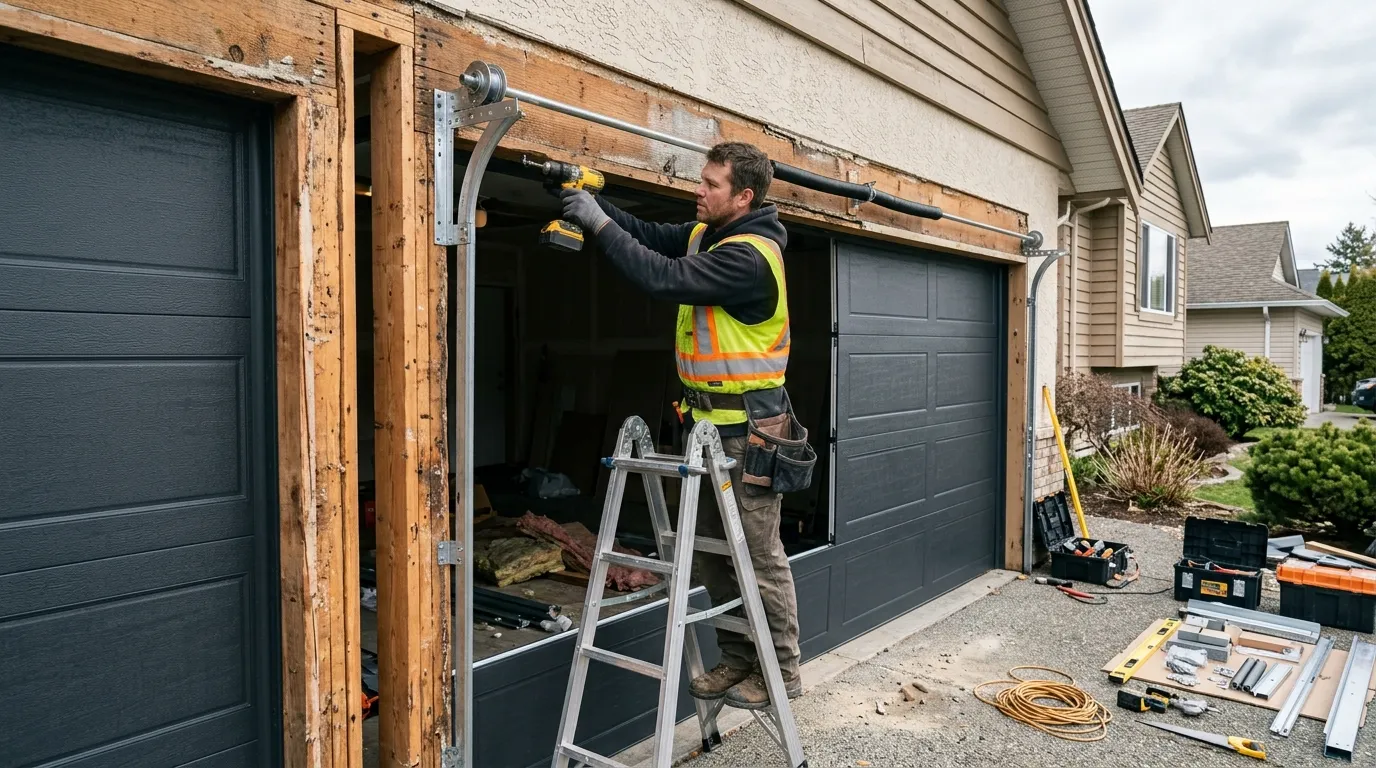
An off-track door in Ken Caryl is rarely just a bent track. Most houses out here were built around 1987, which puts them right in the era when builders switched from the heavier steel rollers of the 1960s and 70s to lighter nylon rollers riding on thinner track brackets. Those brackets loosen over time, and once one side walks even a half-inch out of parallel, the door starts binding on the way down instead of rolling smooth.\n\nWe don't quote a flat number for this job because what's wrong varies a lot. Sometimes it's a bent track section that gets pulled back into line and re-bolted. Sometimes a roller has seized and chewed up the track edge, and that section needs to come out. If the door came off the track hard enough to bend a hinge or crack a stile, that's a different repair on top of the track work, and we'll tell you that on site before we touch anything. What we can say is that a straightforward track repair costs a lot less than a new door, so if your door is only off-track and not structurally damaged, fixing it is almost always the right call.
The complication with 1987-era doors is the hardware spec itself. Track width, roller size, and the gap between the track and the jamb weren't standardized the way they are on doors built after 2000. That means a track section pulled from a newer door often doesn't bolt up clean on an older frame without shimming or swapping brackets, and guessing at it just moves the problem down the line.\n\nWe also run into households with extension spring setups instead of torsion, which was still common in this build era. An off-track door on an extension spring system carries more risk during the fix, because the spring is under load along the same rail you're trying to straighten. That's not a job to force through fast, and it's the honest limitation here: if the frame is bent as well as the track, or if a stile has split, we'll say so rather than bolt a track back onto a door that's going to walk off again in six months.
Colorado's winters are hard on hardware, and Ken Caryl sits in the same severe cold band as the rest of the Centennial service area. Track brackets that are already thirty-plus years old contract and expand with the freeze-thaw cycle, and the screws that hold them to the jamb back out a little more each season. Add a slab that's shifted slightly since 1987, and the track ends up angled just enough that the rollers ride the edge instead of the channel.\n\nThe other common cause is a roller that's simply worn out. Original steel rollers on doors from this era were never sealed, so grit works into the bearing over the decades and the roller starts to bind instead of turning. A binding roller under an opener's pull is what usually yanks the door off the rail, especially on the last foot of travel where the opener puts the most tension on the cable.
We come out from Centennial, about 13 miles away, so the drive is part of the visit, not a separate stop. Once we're on site, a track realignment with a roller swap is usually a same-visit fix. If the bracket itself has pulled loose from the jamb and needs new fasteners set into fresh wood or masonry, that adds time, and if a spring has to come off the door to get the track section out safely, we won't rush that step.\n\nWe won't give you a number of minutes before we've looked at the door, because a door that's cleanly off-track on one hinge is a different job from one that's dropped off both rollers on one side. What we can tell you is that we diagnose it on arrival, walk you through what we see, and quote the repair before we start the work.
No. If a door has come off one or both tracks, the opener can pull it further out of alignment or drop it. Leave it closed if it's down, and don't run the opener until someone's looked at the rollers and track. Ken Caryl's older extension-spring setups make this more of a hands-off situation than newer torsion systems.
Track brackets on 1980s-era hardware loosen with repeated freeze-thaw cycling, and the region sits in a severe cold band. A bracket that's already a little loose from decades of temperature swings is more likely to let go when a roller catches or the door is forced through ice at the bottom seal.
You can sometimes get it back on the rail, but if a roller's worn or a bracket's pulled loose, it'll come off again, and forcing it risks bending the track further or snapping a cable under tension. We'd rather look at it once and fix the actual cause.
Call now or request a free quote - same-day service on most repairs, upfront written pricing.