Centennial, CO · Garage Door Service
The Pinery homes average a 1995 build, newer than most of the service area. See what that means for repair costs and when replacement makes more sense here.
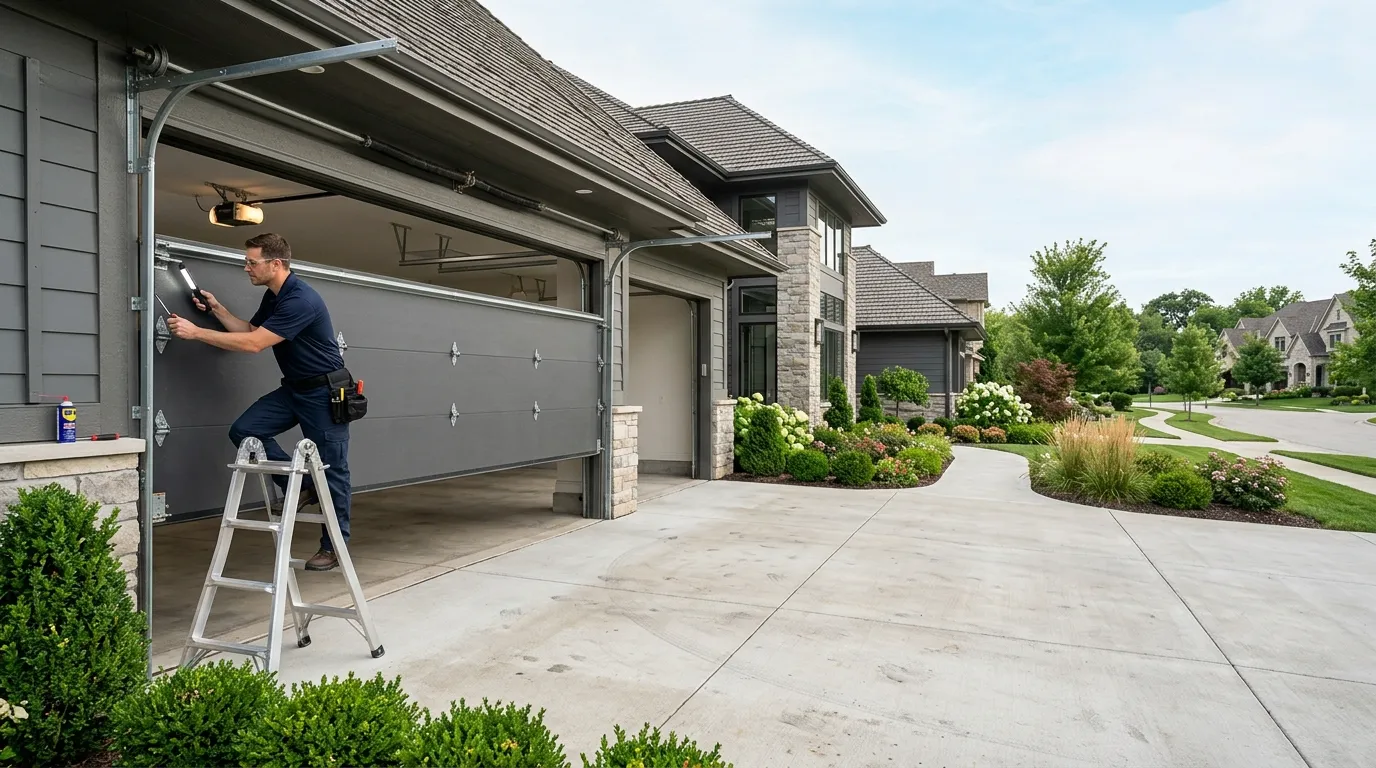
At a median household income of $173,889, most homeowners in The Pinery aren't stretching to make a repair call happen - the math usually favors fixing the door correctly the first time rather than patching around a bad part to save fifty dollars. That changes the conversation we have on the phone. Instead of "what's the cheapest thing that gets the door moving," it's closer to "what actually failed, and is it worth doing right."
The Pinery's housing stock is younger than most of what we see across the rest of the service area - median build year here is 1995, versus 1978 across the wider area covered from Centennial. That means fewer of the original one-piece doors and side-mounted torsion springs we run into on 1960s and 70s stock elsewhere. What we do see more of: openers reaching the end of their circuit board life, extension or torsion springs that have simply cycled out after twenty-plus years, and worn nylon rollers on doors that were never top-of-the-line to begin with. The symptom is usually the same - a door that hesitates, reverses, or won't close all the way - but the part behind it tends to be a different generation of hardware than what we're pulling out of an older Centennial-area house.
Because The Pinery sits about 12 miles out from Centennial, we load the truck before we head your way rather than diagnosing on-site and driving back for a part. For a house built in the mid-90s, that usually means standard torsion springs sized for a typical double door, common opener drive components, and steel rollers rated for the winters this area gets - the service area falls in a severe cold climate band, and hardware not rated for that cycles through more freeze-thaw stress every year.
What we don't stock on the truck: specialty openers with proprietary circuit boards, custom-width panel sections, or parts for doors that have been discontinued by the manufacturer. If your door needs one of those, we'll tell you on the first visit rather than have you wait on a truck that isn't carrying it. That's the honest limit - a 12-mile drive doesn't help if the part still has to be special-ordered.
On a house from the mid-90s, a torsion spring replacement or opener swap is usually a same-visit job once we've confirmed the diagnosis - no waiting on parts we don't carry. We check the springs, cables, rollers, and track alignment together rather than just replacing the one obviously broken piece, because a door that's cycled for close to 30 winters in this climate often has more than one thing wearing out at once.
We don't sell a full door replacement on a repair call unless the panels themselves are damaged, warped, or the door is genuinely beyond what a spring or roller job can fix. For most Pinery houses in this age range, that's not where the door is at yet - the springs and openers give out well before the panels do.
With a median household income of $173,889 here, most homeowners we talk to in The Pinery aren't deciding whether they can afford the repair - they're deciding whether the repair is worth doing versus letting the door go and replacing it outright. For a door built around 1995, that line usually falls in the repair's favor: the panels and frame are still solid, and it's the moving parts - springs, rollers, opener - that fail first in this climate.
We won't quote a number here we can't back up on your specific door, but the same logic applies across the roughly 3,980 households in The Pinery: a spring or opener fix on a door this age almost always costs less than a new door, and it's rarely close.
No. We work out of Centennial and drive to The Pinery, about 12 miles out, for scheduled repair calls. We don't claim a local branch or a guaranteed response window here - we're upfront that it's a drive-in job.
Generally, yes. The Pinery's median build year is around 1995, newer than much of the wider service area, which runs closer to a 1978 median. That means more mid-90s opener and spring hardware here and fewer of the original 1960s-70s doors we replace parts on elsewhere.
For most houses built around 1995, repair wins - the panels and frame hold up well past that age, and it's springs, cables, and openers that wear out first. We'll tell you plainly if your door's an exception rather than push a replacement you don't need.
Call now or request a free quote - same-day service on most repairs, upfront written pricing.