Centennial, CO · Garage Door Service
The Pinery's homes run newer than most of Centennial's service area, built mostly after 1995. That changes which parts fail and what a tech carries on the truck.
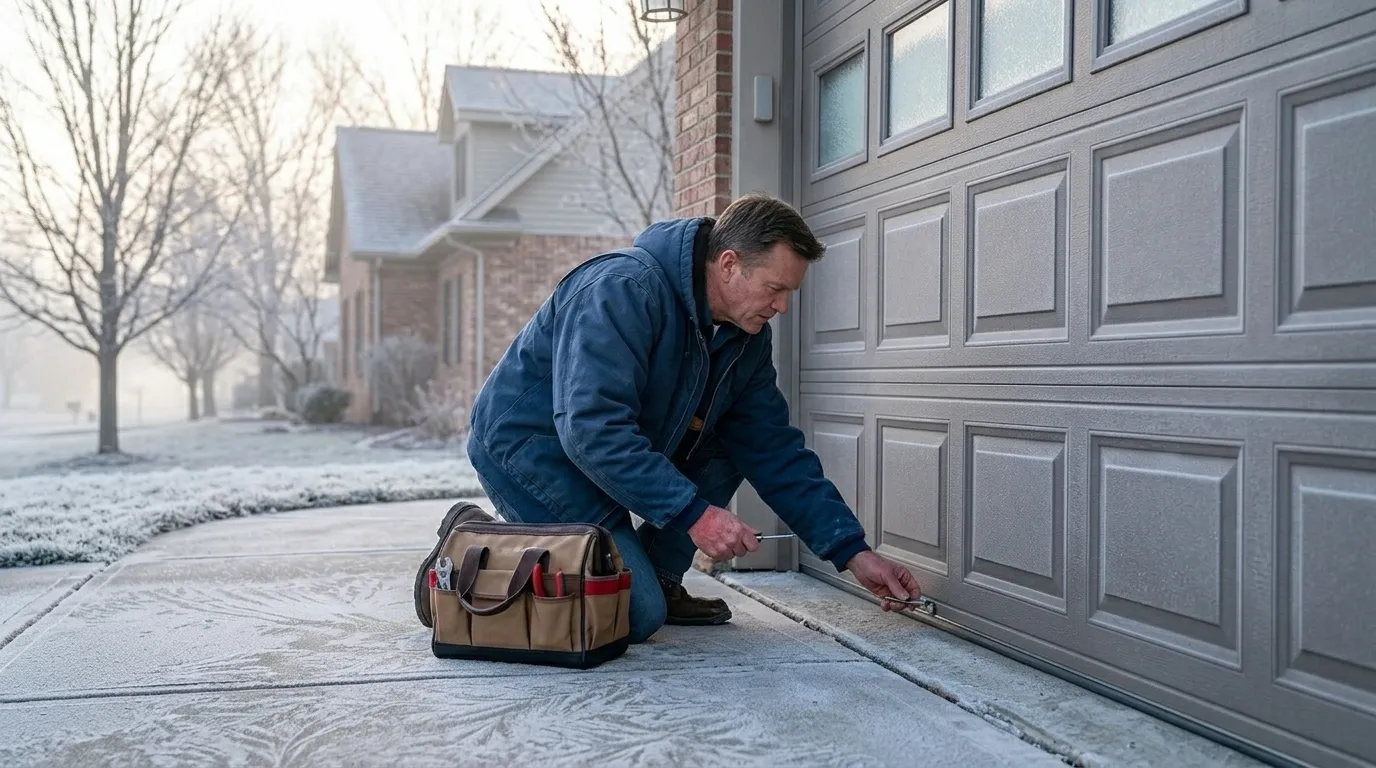
Most of Centennial's service area is built out of 1960s and 70s stock, but The Pinery skews newer, with a median build year around 1995. That gap of nearly two decades matters more than it sounds like it should. A door installed in 1995 is running its second or third opener, likely a chain-drive unit bolted to steel rail, and its springs have already been swapped at least once if the house has changed hands. The symptom we hear from this area isn't the seized, rusted-shut door you'd expect on an older side of town - it's a door that still looks fine but slams the last six inches of travel, or an opener that grinds before it lifts. That's a limit-switch or gear-and-sprocket issue on a unit old enough to wear out but young enough that nobody's replaced it yet. On a colder morning, a door that's marginal will show it fastest, since cold-stiffened lubricant and slightly under-tensioned springs don't have any slack left to hide the problem.
Because the housing here is newer than the Centennial-area average, the truck carries different stock for a Pinery call than it would for a 1970s tract house. We're less likely to need obsolete side-mounted torsion hardware and more likely to need standard extension or torsion springs sized for a mid-90s double door, plus chain-drive opener gear kits and photo-eye sensor pairs - the sensors on a door this age are usually the original pair, and they fail from age and misalignment before anything else on the unit does. Given the region's cold, severe winter climate, we also stock cold-rated lubricant and weatherstrip kits, since the seal on a 90s-era door has usually hardened and cracked by now even if the panel itself is sound. What we don't stock on the truck is anything obsolete - if a door here still has an unusual original part, that's a special-order item, not a same-visit fix.
A typical Pinery job starts with the opener, not the door itself, since the age of the housing stock here means the mechanical opener parts are usually further along in their wear cycle than the door hardware. We check limit switches, drive gear, and the sensor pair before touching springs, because on a door this age it's common for two small issues to be happening at once and masking each other. If it is a spring, a standard torsion or extension spring for a mid-90s double door is a controlled, same-visit repair - not the improvised job an older, undersized garage sometimes requires. Balance and travel get tested afterward, since a house from this era usually still has original track and rollers, and roller wear at 12 to 15 miles from Centennial's climate exposure is a common secondary finding rather than the main complaint. We're honest when a fix doesn't make sense: if the opener is original and its control board is failing, replacing the board on a unit this old often costs close to a new opener, and we'll say so rather than patch it.
We don't quote a number sight unseen, but the job profile here is more predictable than in the older parts of the Centennial service area - fewer surprise parts, because the hardware is common and still available. What drives the bill on a Pinery call is usually the opener repair or replacement rather than the door panel itself, since panels from this era hold up well in this climate if they've been maintained. The area's household income runs well above the wider service area's median, but that doesn't change what a spring or a gear kit costs - parts pricing is the same across the region. The honest limitation: if you're calling about a door that's slamming or grinding intermittently, we can't tell you the fix or the cost until someone's hands are on it, because two different failures can produce the same symptom on an opener this age.
Homes in The Pinery are newer on average than much of the wider Centennial service area, built mostly after the mid-90s. That means the mechanical opener - gears, limit switches, sensors - has usually reached the end of its working life before the door panel or track has. We check the opener first on most calls out here.
Not usually, and we don't need to. The build era here calls for standard torsion or extension springs and common chain-drive opener parts, which we do stock. If a house has an unusual original part from before that era, it's a special order, not a same-visit fix.
Cold affects any door, but a door from the mid-90s with original weatherstripping has usually already hardened and cracked, so cold-season symptoms show up faster than on a newer seal. We carry cold-rated lubricant and replacement weatherstrip for this reason.
Yes. If the control board on an original mid-90s opener fails, board replacement can cost close to a new unit. We'll tell you that plainly rather than repair a board that's likely to fail again soon.
Call now or request a free quote - same-day service on most repairs, upfront written pricing.