Centennial, CO · Garage Door Service
New garage door installs for The Pinery's 1990s-era homes, sized for Colorado's cold winters. Serviced from Centennial, 12 miles out. No price without a look at your door.
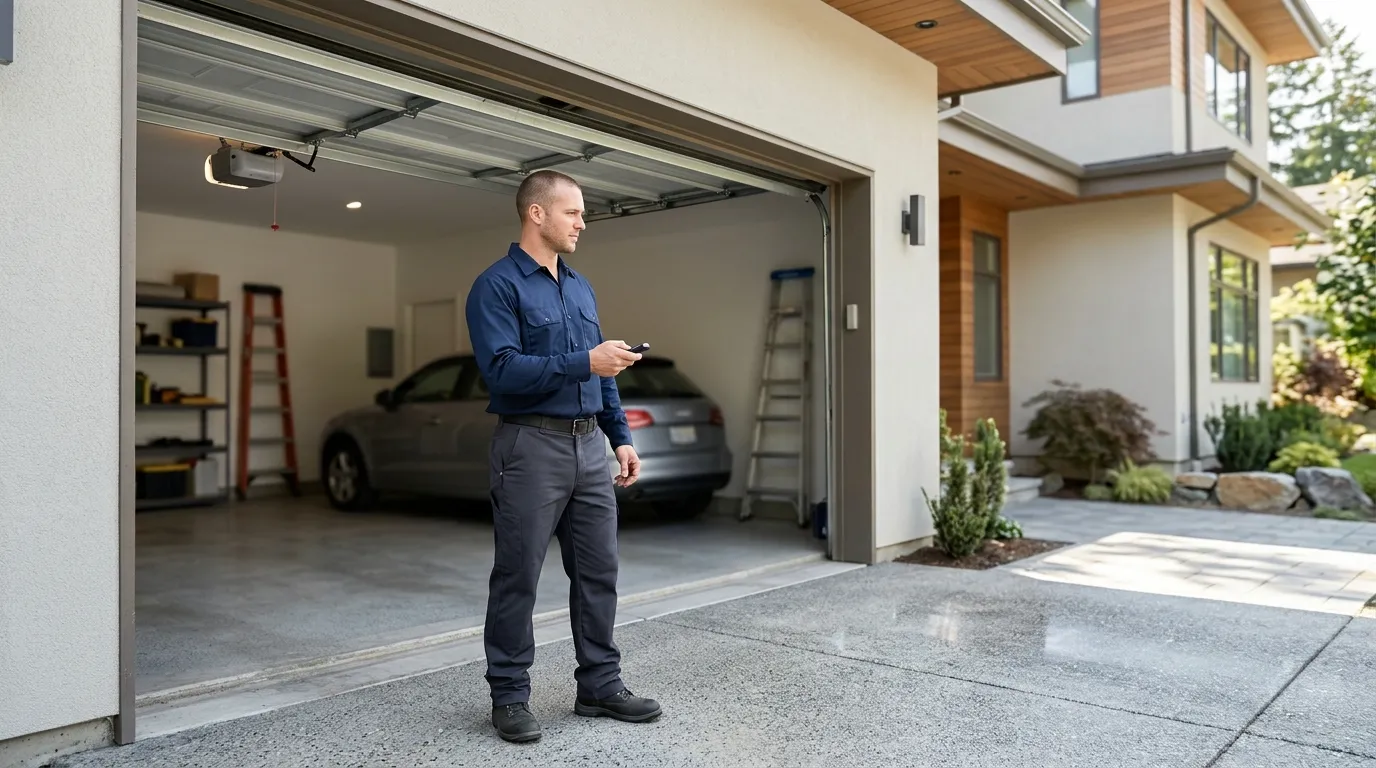
Most of the calls we get out of The Pinery aren't about a door that's falling apart. They're about a door that's twenty-some years old and just tired: an opener straining on the last few inches of travel, a spring that's sagged enough that the door drops the last foot instead of settling, or a panel that's dented from a mower or a trailer hitch and never sat quite right again. This part of the service area has a median build year around 1995, which puts most garage doors here into their second or third opener and often their original springs. That's a long run for torsion hardware that was only rated for the door's original weight, not for the extra insulation or the heavier steel most owners upgrade to now. If your door was installed with the house, it's from the same era as the house, and that era is closer to thirty years back than most people think when they call.
We don't come out to The Pinery on the promise of same-day anything. We're driving in from Centennial, about 12 miles, so a new install here gets scheduled, not walked in on.
For a 1990s-built door, the sizing is usually straightforward: standard 7-foot heights, common double and single widths, torsion springs sized to a door that's heavier than what was common in the '60s and '70s stock elsewhere in the metro. We carry standard torsion spring sizes, standard track, and standard rollers on the truck, which covers the bulk of what a house from this build era needs. What we don't stock is anything custom-width or a legacy opener drive system tied to a specific builder spec from that period - if your track or header clearance is non-standard, that part gets ordered, and that adds days, not hours.
Colorado's cold-and-severe climate band means insulation matters more here than it does somewhere milder. A new door install in The Pinery isn't just swapping panels - it's usually a chance to move from a single-layer steel door to a two-layer or polystyrene-core door that actually holds heat in the garage bay through a Front Range winter. We stock insulated panel options for this reason, not as an upsell but because an uninsulated door on a house built in the mid-90s is doing less than the house around it.
A full new install starts with pulling the old door off its track, springs and all, and checking the opening itself - jamb square, header clearance, floor level - before anything new goes in. On a house from this build era, the opening is usually true, but we still check it, because settling happens over thirty years even on a well-built slab.
Next is track and hardware: new torsion spring sized to the new door's actual weight, not a guess based on the old one, new rollers, new cable. If the door is going from single-layer to insulated, the weight changes enough that reusing the old spring is a bad idea even if it still looks fine. Opener compatibility gets checked too - most 1995-era openers are chain-drive units that are still doing their job, and depending on the door and the customer's preference, we either keep the existing opener and match new hardware to it, or replace both together.
Last is balance and travel: setting the door so it holds at any point on manual release, and setting opener travel limits so it doesn't slam the floor or stall three inches short. That last step is the one skipped most often on cheap installs and the one owners notice first when it's wrong.
We don't have a set price to quote here without seeing the door and the opening - width, insulation level, opener type, and whether the track needs anything non-standard all move the number, and guessing at it before we've looked would be worse than not answering. What we can say is that the input costs on this job are the same regardless of the house: spring rated to actual door weight, insulated panel option given the climate, and an opener that matches the door's cycle count if replaced.
One honest limit: if your opening isn't standard - non-standard header clearance, an odd width, or hardware tied to an old builder spec - we may need to order a part before we can finish the install, which pushes the timeline out past the visit. That's more common on older or custom builds than on typical 1990s construction, but it happens, and we'd rather tell you upfront than promise a one-visit job and miss it.
Most homes here were built with a median year around 1995, so original doors and their springs are commonly pushing 25-30 years old. Even if the door still looks fine, torsion springs and cables of that age are past a safe service life, and a new install is often cheaper long-term than repeated repairs on aging hardware.
No. We run out of Centennial, about 12 miles away, and schedule installs in The Pinery rather than offering walk-in same-day service. Plan on booking ahead rather than expecting a truck on short notice.
Given the cold-and-severe climate band this area sits in, yes, it's worth it if you're replacing anyway. A two-layer or foam-core door holds heat in the garage bay noticeably better than a single steel panel, especially if the garage shares a wall with living space.
Usually. If your opener is a working chain or belt-drive unit, we size the new spring and hardware to match it rather than replacing both. If the opener's near the end of its life anyway, we'll tell you honestly rather than force a match that won't hold up.
Call now or request a free quote - same-day service on most repairs, upfront written pricing.