Centennial, CO · Garage Door Service
The Pinery's garage doors mostly date to the mid-1990s, and the openers on them are aging out. We install modern openers built for Colorado winters, from our Centennial shop 12 miles out.
Most garage doors in The Pinery went up around 1995, which puts them well past the area-wide median build year of 1978 for the broader Centennial service area. That later build date matters here: these are steel sectional doors on wider two-car openings, often with heavier insulated panels, since the codes and materials in use by the mid-90s pushed toward thicker sections than the doors from decades earlier still standing elsewhere in the region.
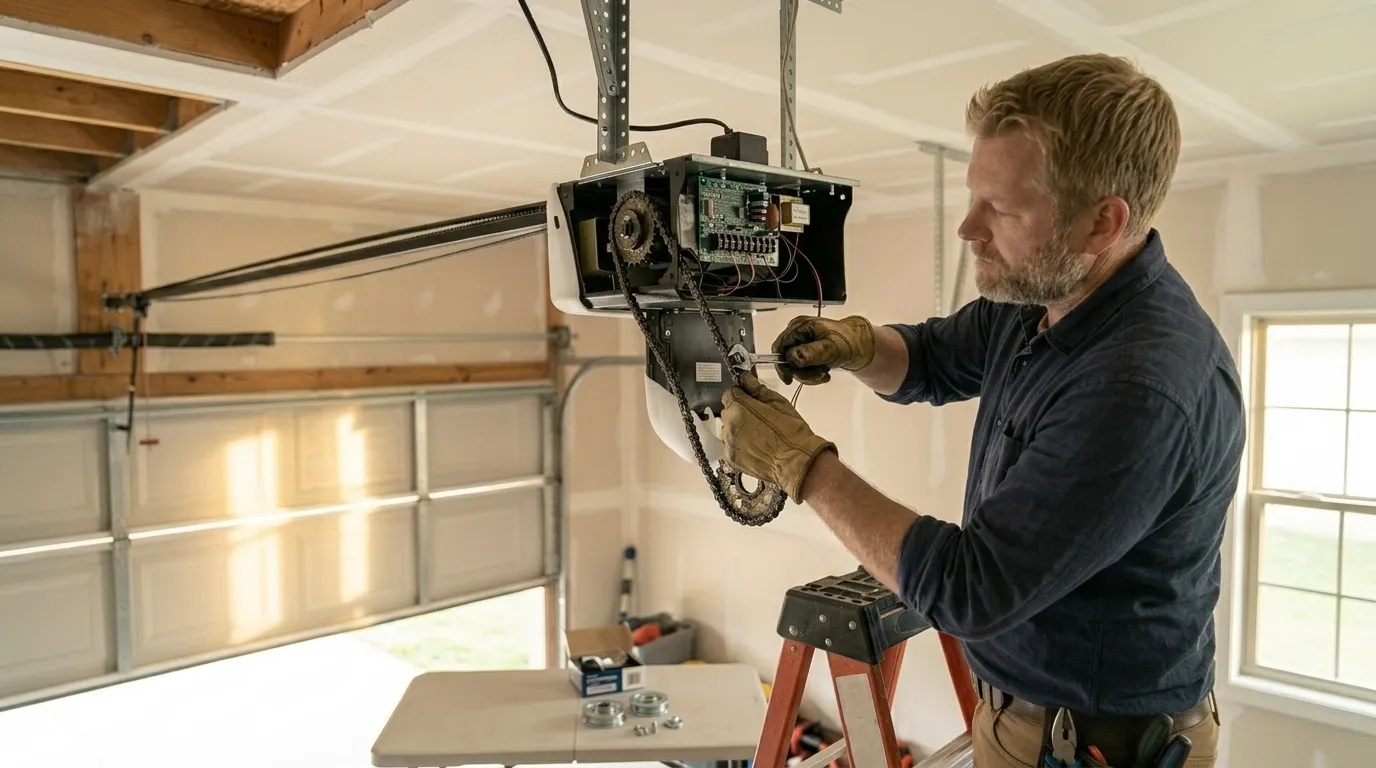
The openers that came with those doors are chain-drive units, usually 1/3 horsepower, with a nylon drive gear inside the motor housing that was never meant to run for thirty years straight. When that gear strips, you get a motor that hums and a door that doesn't move, or moves an inch and stalls. You might also see the wall button light flicker, or a remote that used to work every time now working every third try. None of that is the door's fault. It's the opener giving out at the age these units typically do.
We don't chase every flicker as an opener problem first - sometimes a door that's binding on its tracks will make an opener strain and look like it's failing when the real issue is upstream. But on a heavier, wider door from this era, a tired chain-drive motor is the far more common call.
We don't carry parts for a 1995 chain-drive unit. Those brands and gear kits are mostly discontinued, and hunting down an exact match isn't worth your money or our time when a new opener does the job better. What we stock on the truck are current belt-drive and chain-drive openers sized for a standard two-car residential door, plus the safety sensor pairs, wall consoles, and mounting hardware that go with them.
Given the cold-climate band this whole service area sits in, we lean toward openers with battery backup as a stocked option, not an upsell add-on. When a hard snow knocks out power, a battery backup opener still lets you get the car out or in - that's a real consideration here, not a sales pitch. We also keep heavy-duty rail kits on hand for the wider double doors common on houses built in the mid-90s, since an underrated opener on an oversized door is exactly what leads to the early gear failure we see on these jobs.
One honest limit: if your door itself is out of square or the track is bent, we'll tell you before we mount a new opener on it. Installing a new motor on a door that isn't moving true just transfers the strain to new parts faster.
The job starts with pulling the old motor head off the rail and disconnecting it from the door arm, then checking the header bracket above the door - on houses from this era that bracket is usually original wood framing, and we verify it's still solid before hanging a new unit off it. We mount the new opener, run the rail, and set the travel limits so the door seats fully on concrete without over-running.
Safety sensors get replaced as a pair, not patched, since mismatched sensors are a common source of a door that reverses for no reason. We wire in the wall console and test the manual release, then run the door through a full open-close cycle checking force settings - too tight and it'll reverse on a leaf blowing across the sensor beam, too loose and it won't stop on an obstruction like it's supposed to.
If you're going with a battery backup model, we mount the battery pack and confirm it actually carries the door through a cycle with power cut, not just that the light comes on. That test takes a few extra minutes and it's the difference between a battery backup that works when you need it and one that just sits there.
We don't have a set price to quote here - it depends on the opener you choose, whether you want battery backup, and what the header bracket and wiring look like once we're up on the ladder. What we can say is that The Pinery's household income runs well above the wider service area's median, and homeowners here more often ask for the belt-drive, battery-backup option over the base chain-drive unit - it's quieter and it holds up better against a Front Range power outage.
We travel to The Pinery from our shop in Centennial, about 12 miles out, so the visit itself isn't a separate line item - it's built into how we quote the job once we've seen the door and opener in person. If your current opener is still running but just noisy, replacing the drive gear alone can sometimes cost less than a full swap - we'll tell you which way makes sense for your unit before we start, not after.
Usually. The nylon drive gear in openers from that era is the common failure point, and once it strips, the parts to rebuild that specific motor are largely discontinued. In almost every case here, a full replacement costs about the same as hunting down old parts, and you get a warranty on the whole unit instead of one gear.
It's not required, but given the cold-climate conditions across this service area and the power outages that come with hard winter storms, a battery backup opener means you can still get your car out if the power drops. We stock it as a standard option, not an upsell.
In most cases, yes - we size the opener to your door's weight and width rather than its age. The main thing we check first is whether the header bracket and track are still square and solid, since that affects the mount more than the door's age does.
About 12 miles from our Centennial location. We build the drive into how we schedule and quote the job, not as a separate call-out charge.
Call now or request a free quote - same-day service on most repairs, upfront written pricing.