Centennial, CO · Garage Door Service
Garage door repair and install for Castle Pines homes built mostly around 2003 - newer hardware, different failure points than older stock nearby. Travel from Centennial.
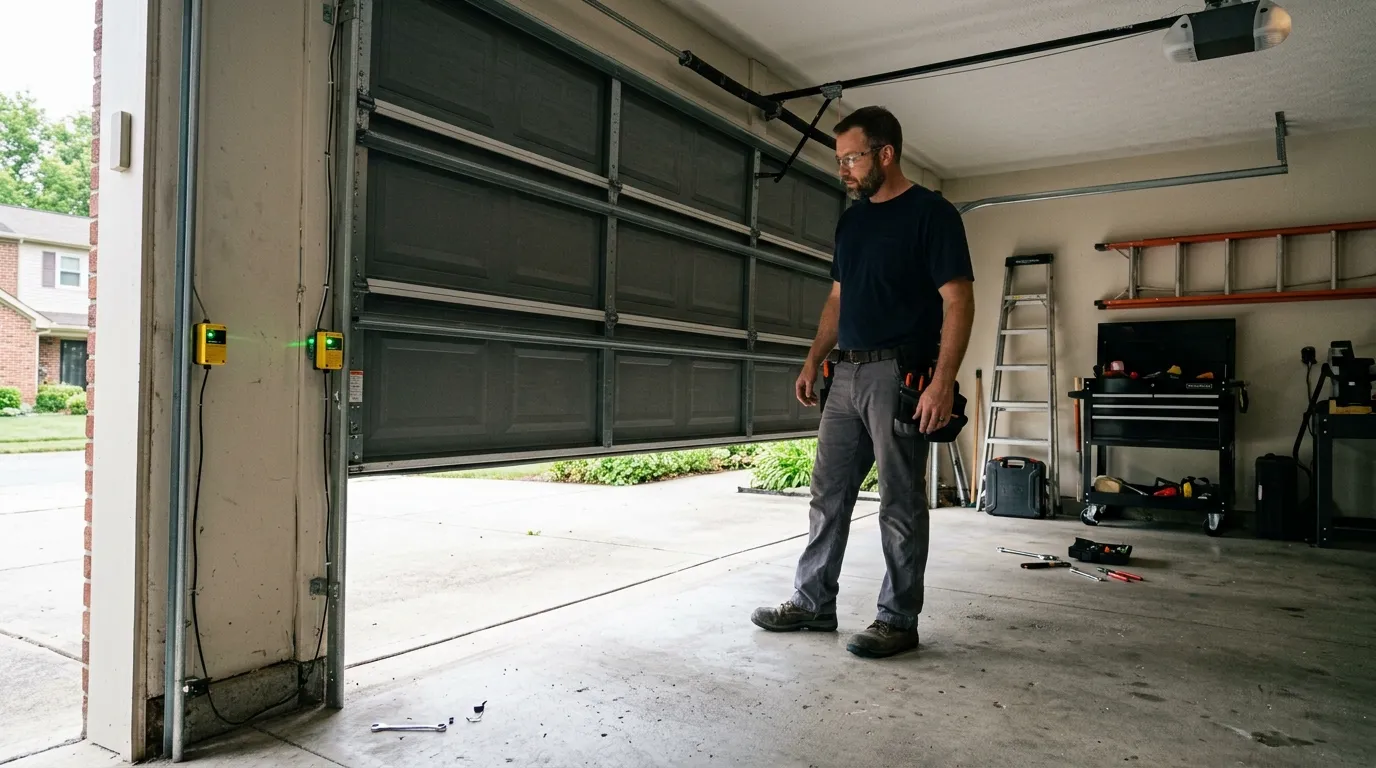
Castle Pines sits about 9 miles from our Centennial shop, and the calls we take out here look different from the ones we get closer in. Most houses in this area went up around 2003, which puts them decades newer than the 1978 median across the rest of our service territory. That means we're not chasing down 1970s hardware here - we're working on factory-installed steel doors, torsion springs rated for taller openings, and openers with circuit boards instead of simple relay switches. The most common jobs: opener logic board failures, broken springs on doors that have finally hit their cycle limit after roughly two decades of daily use, and sensor alignment issues after a bump from a car or a snow blower. We also get a fair number of calls about noisy rollers - a lot of these builds used cheaper nylon rollers from the factory, and by year fifteen or twenty they're due for an upgrade to steel ball-bearing ones. We don't stock a depot in Castle Pines - every job here means a drive from Centennial, so we schedule the route accordingly rather than promising a same-hour arrival we can't back up.
With a median build year around 2003 and roughly 4,523 households, Castle Pines is one of the newer pockets we cover. Median household income here runs near $189,918, well above the $116,838 median across the wider service area, and that income difference tends to show up in the doors themselves - more insulated steel and composite panels, fewer bare single-layer doors, more openers with battery backup and camera-equipped keypads. Compare that to the broader area, where housing spans 1938 to 2005 with a median around 1978 and a mix of 1960s-70s stock across the 30 communities we serve. Castle Pines skipped most of that older era. What that means practically: fewer of the odd legacy parts - the discontinued spring sizes, the obsolete extension-spring setups - and more of the parts that are still in current production, which usually means faster part sourcing when something breaks.
A door built in 2003 is old enough to have real wear but young enough that it was engineered under modern spring and cable standards, so failures tend to be mechanical fatigue rather than mismatched or improvised hardware. Torsion springs from that era were sized for the specific door weight from the factory, and after roughly two decades of two-cycles-a-day use, they're reaching or past their rated life - that's the single biggest reason we get called out here. Openers from the early-to-mid 2000s are also aging into board failure territory; the motor usually outlasts the logic board and the capacitor. Given the cold-and-severe winter climate this region sits in, temperature swings put extra strain on aging springs and worn rollers - metal contracts, lubricant thickens, and a spring that was already near its limit is more likely to let go on a frigid morning. One honest limitation: if your opener board is failing and the model's been discontinued, we may not be able to source an exact replacement board, and a full opener swap ends up being the more sensible call than chasing a part.
Most of what comes out of Castle Pines by phone is opener trouble - a door that won't respond to the remote, or one that reverses partway up for no obvious reason, which is usually a misaligned photo-eye sensor rather than anything structural. Second most common is a spring that finally snaps, often noticed because the door won't budge or drops fast when someone tries the manual release. We also see cable fraying on doors nearing the twenty-year mark, and rollers that have gone from a quiet roll to a grinding rattle. Because homes here were largely built to a single era of code and construction, the fixes tend to be consistent from house to house rather than the grab-bag of custom setups we run into on older streets closer to Centennial. We travel out for both repair and full door replacement, but we don't run a local yard here, so plan on a scheduled visit rather than a walk-in stop.
No. We're based in Centennial, about 9 miles away, and we drive out for every Castle Pines job. There's no local walk-in location here, so service is scheduled rather than on-demand drop-in.
Most Castle Pines homes went up around 2003, so a lot of original openers are now old enough for the logic board or capacitor to fail even though the motor itself is still fine. That's the most common opener complaint we get from this area.
Yes. The wider area we cover has housing back to 1938 with a lot of 1960s-70s stock, but Castle Pines is mostly 2003-era construction, so the hardware, spring sizing, and opener technology are noticeably newer here.
The region sits in a cold, severe winter climate band, and that strains springs and rollers regardless of the door's age. A 2003-era door isn't immune - metal parts still contract and lubricant still thickens in a hard freeze.
Call now or request a free quote - same-day service on most repairs, upfront written pricing.