Centennial, CO · Garage Door Service
New garage door installation for Centennial homes built from the 1960s through the 1990s, sized for original openings and rated for Front Range cold snaps.
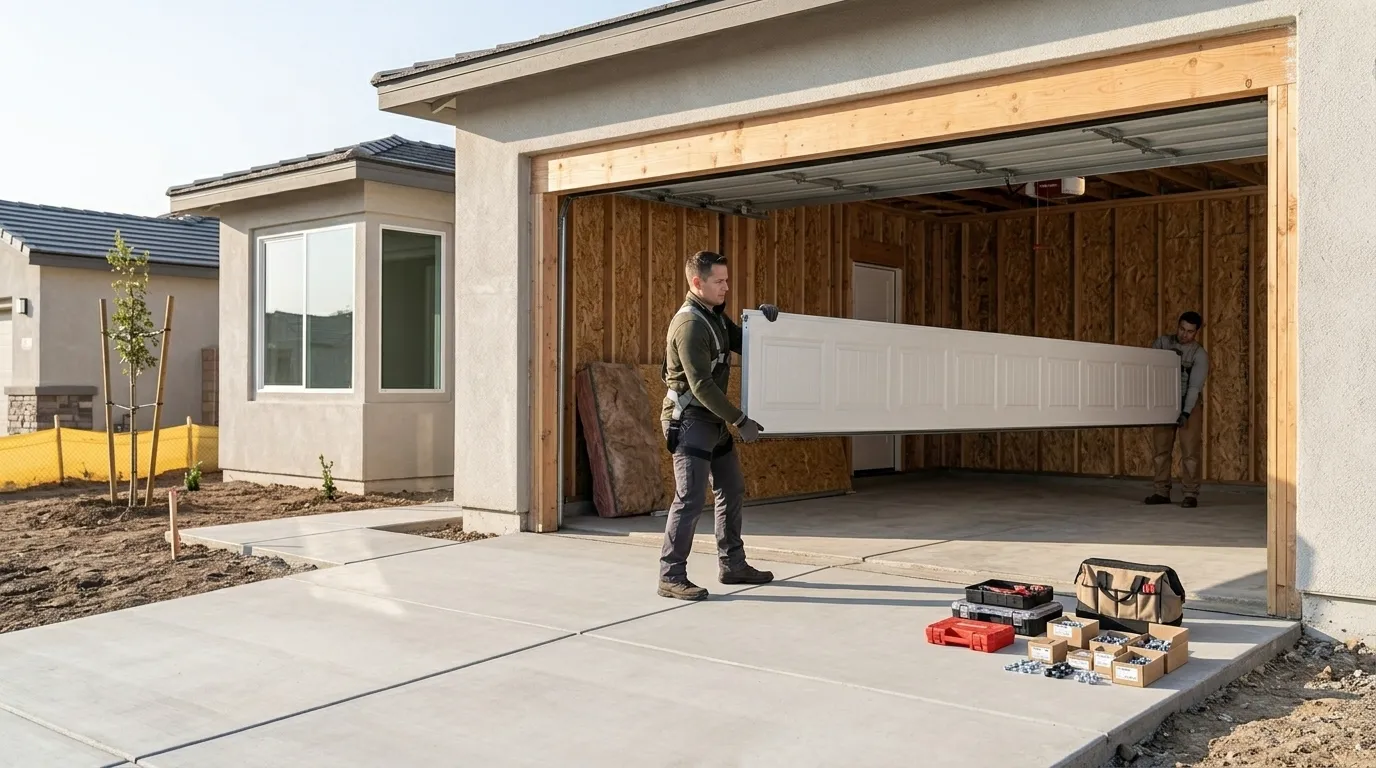
You're not calling about a squeak. You're calling because the door won't come down square anymore, the seams have separated at the corners, or the panel is bowed enough that daylight shows around the edges when it's shut. On a lot of Centennial garages this shows up as a door that still opens and closes but has gone soft - flexing when the wind hits it, sticking partway up, or needing a shove to seat in the track. That's not a repair problem. That's a door telling you it's done, and in this area it usually happens right on schedule with the age of the house.
Most of the calls we get for a full install aren't emergencies. They're homeowners who tried a spring swap or a new opener first, and the old door kept giving them trouble anyway because the panels themselves had reached the end of their run. Once the steel is fatigued or the wood core has swelled and shrunk one winter too many, no amount of adjustment fixes it.
Housing in this service area was built mostly between 1938 and 2005, with the bulk of it going up in the 1960s and 70s and a median build year of 1978. That means a large share of the doors we're replacing are original or close to it - steel or wood panels from an era before insulated cores and modern rollers were standard, hung on hardware sized for openings that don't always match today's stock doors.
The climate does the rest of the damage. This is a cold, severe-winter band, and a non-insulated door from the 1970s takes a beating over decades of hard freeze-thaw cycles: seals crack, panels warp at the seams, and steel that's been through forty-plus winters loses its rigidity. It's a different failure pattern than you'd see on a five-year-old door, and it's why age-appropriate replacement, not another patch repair, is usually the right call once a door from that era starts acting up.
A proper install starts with measuring the actual opening, not assuming it matches a catalog size - older Centennial garages built to 1970s-era framing don't always line up with today's standard rough openings. We check the track alignment, the header clearance, and whether the existing jamb needs shimming before a new door goes in.
For a cold-climate area like this, an insulated door with a sealed bottom astragal and weatherstripped panels does more work here than it would in a mild climate - it's the difference between a garage that holds heat and one that doesn't. We size springs to the actual door weight rather than reusing whatever tension was on the old unit, since a mismatched spring on a new door is a callback waiting to happen.
One limitation worth saying up front: if your opening is a nonstandard size from the original 1960s-70s construction, a custom-width door isn't something we keep on the truck. Those get special-ordered, and that adds lead time beyond a standard-size swap.
Swapping a garage door yourself is possible on paper. In practice, a torsion spring under full tension and a 150-plus pound door balanced on cheap track brackets is not a place to learn by trial and error - that's where the serious injuries happen, not on the easy parts of the job.
Where it makes sense to DIY: cosmetic stuff. Repainting a panel, replacing a keypad, swapping weatherstripping on a door that's otherwise sound. Where it doesn't: anything involving the spring system, the header bracket, or resizing an opening in an older Centennial home where the original framing wasn't built to current standards. If your door is original to a house from the 60s or 70s and it's failing the way described above, that's a full-install job, not a weekend project.
If the panels are bowed, the seams have separated, or the door needs force to seat in the track, that's usually structural fatigue, not a fixable part. Doors original to houses built in the 1960s-70s stock common across this area have typically reached that point by now, especially after decades of hard winters.
Given the cold, severe winters here, an insulated door with sealed weatherstripping holds heat noticeably better than an old uninsulated steel or wood panel door. It won't fix a poorly insulated garage on its own, but it stops one of the biggest sources of heat loss at that opening.
Yes, but nonstandard openings from older construction sometimes need a special-order width or height, which adds lead time compared to a standard-size swap. We measure your actual opening before quoting so there's no guessing on size.
Sometimes - a worn opener or a single cracked panel can be fixed. But once a door from the 1960s-70s era is warped at the seams or the steel has lost its rigidity, repair costs start approaching replacement cost without solving the underlying age problem.
Call now or request a free quote - same-day service on most repairs, upfront written pricing.