Centennial, CO · Garage Door Service
Serving Columbine's 1976-median homes, 11 miles from our Centennial base. We know the torsion hardware and cold-weather faults common to this area's housing stock.
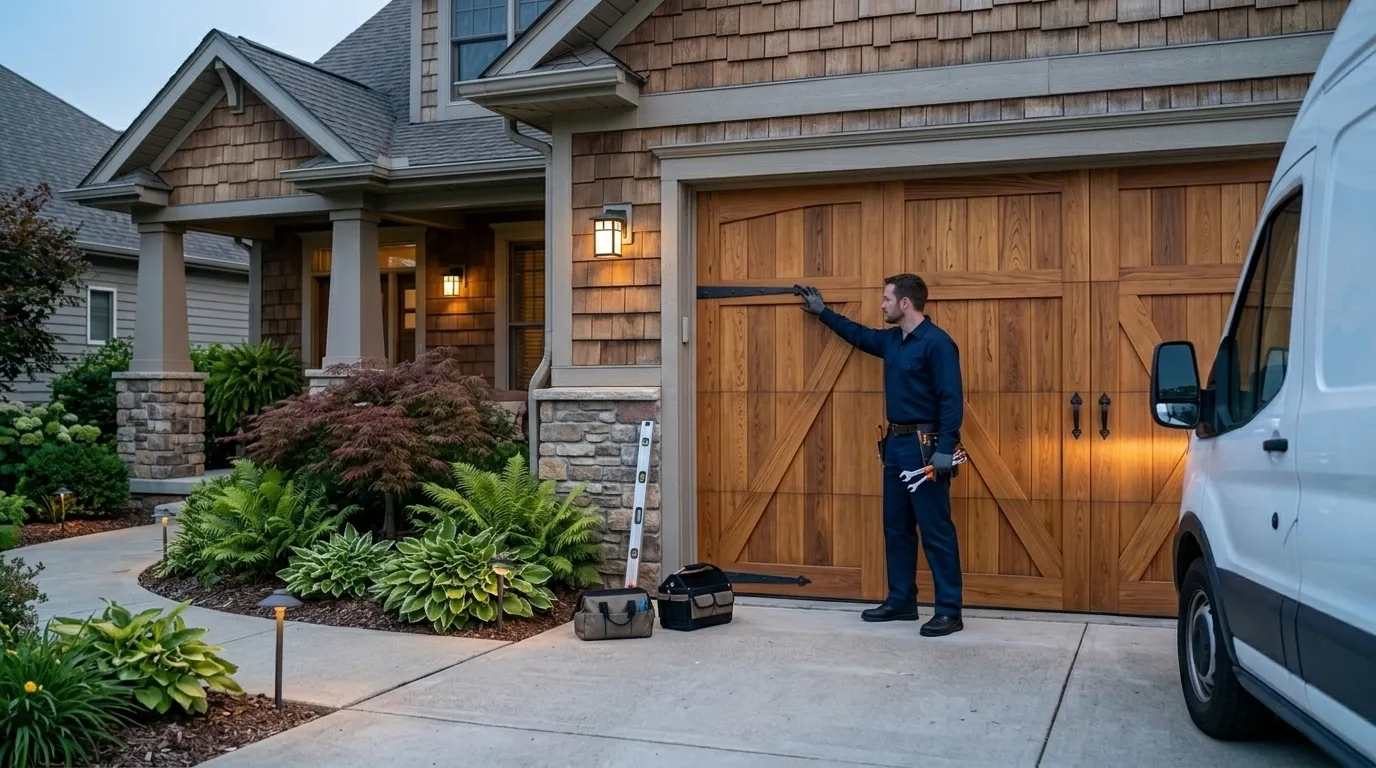
We drive out to Columbine from our Centennial base, about 11 miles up the road, mostly for jobs tied to what's actually installed on these houses. With a median build year of 1976 here, a good chunk of the doors we touch are original or close to it - steel sectional doors on torsion spring setups that are now pushing 45 to 50 years old. That's long past the working life of the spring itself, even on a door that still looks fine from the driveway. We also get openers from the first wave of chain-drive residential units, which fail in ways newer belt-drive openers don't: burned-out capacitors, stripped gears, logic boards that just stop taking a signal. It's less about emergency call-outs and more about replacing parts that were never meant to last five decades. We don't keep a truck stationed in Columbine, so we schedule the trip out rather than promising same-hour arrival.
Columbine sits inside a service area where housing overall runs 1938 to 2005, with most of the broader stock dating to the 1960s and '70s - but Columbine itself centers on 1976, right in that second wave of suburban building. With 9,559 households here and a median income of $129,480, noticeably above the $116,838 median across the full 30-area territory we cover, this is a place where people tend to invest in upkeep rather than let a door limp along. That combination - older original hardware, but homeowners willing to pay to fix it right - is different from areas built earlier or later. It's not the housing stock of Cherry Creek a mile north, and it's not the newer construction you'd find in Stonegate five miles out. Columbine's doors are a specific generation, and the fixes follow from that.
A door installed around 1976 was built for a torsion spring system sized to steel or wood panel weights that were standard then, often paired with hardware that's since been discontinued by the original manufacturer. When a spring on one of these breaks, we frequently can't just swap in the exact original part - we cross-reference the wire gauge and wind to a current equivalent. Track brackets from this era are also more likely to be lag-bolted into jamb wood that's dried and shrunk over the decades, so a repair sometimes turns into a bracket reset, not just a spring swap. On the electrical side, garage door openers from the mid-to-late '70s predate photo-eye safety sensors entirely, which means some of these doors are running without a code-required safety feature until we retrofit one. We're upfront when a repair isn't worth it: past a certain point, patching 1976-era hardware costs more over two visits than replacing the unit once.
The service area sits in a cold-climate zone with severe winter conditions, and that shows up in specific ways on Columbine's older doors. Nylon rollers original to a 1976 install go brittle and crack in a hard freeze, and the steel roller shafts they ride on develop rust pitting that eats through bearings faster than in a milder climate. We also see torsion springs that have taken decades of temperature swings snap clean rather than stretch - that's the sudden-bang, door-won't-budge call. Weatherstripping on these older frames tends to be long gone or brittle, which isn't an emergency but does mean cold air and moisture getting into the garage all winter. We handle the spring and roller side. We don't do general home insulation work, so if the ask is sealing up the whole garage envelope, that's outside what we send a truck for.
No. We run out of Centennial, about 11 miles away, and schedule Columbine jobs as a drive-out rather than promising a fixed local response time. We'll give you a window when you call.
On a torsion spring installed around 1976, decades of temperature cycling and cold-weather stress make the steel more likely to snap outright rather than gradually weaken. That's the sudden loud bang and a door that won't move - it's the spring, not the opener.
Sometimes, sometimes not. If it's one spring or a roller set, repair makes sense. If we're also finding bracket rot, an opener with no safety sensor, and panel rust, the parts and labor across two visits can exceed the cost of one new door. We'll tell you which situation you're in.
Rarely as exact matches. Manufacturers from that era have mostly discontinued the specific spring wind and roller sizing used then. We cross-reference to a current equivalent that fits the same drum and shaft rather than hunting for an obsolete part.
Call now or request a free quote - same-day service on most repairs, upfront written pricing.