Centennial, CO · Garage Door Service
Centennial Garage Door Pros travels 6 miles to Cherry Hills Village for repairs on the late-1970s doors and hardware common to this area's housing stock.
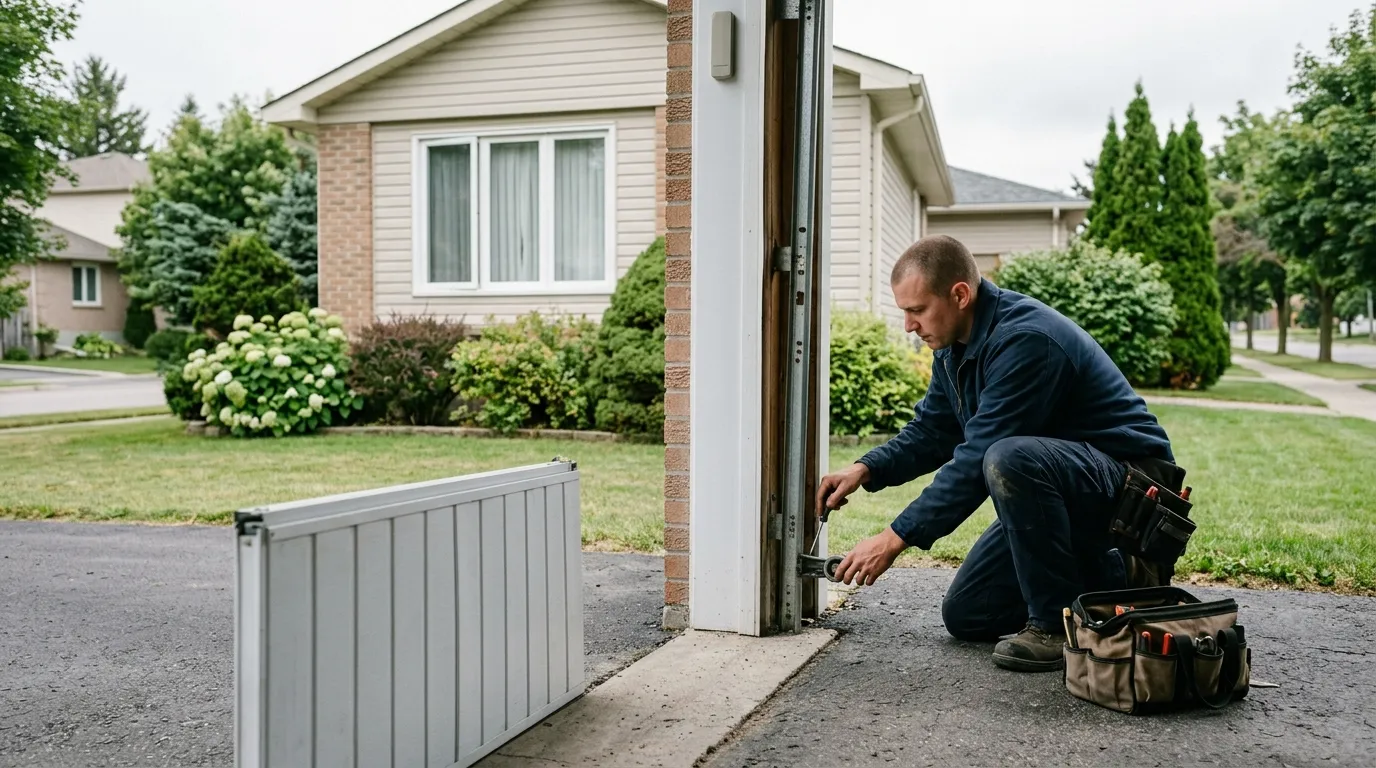
We drive out from Centennial, about 6 miles, to handle spring, opener, and panel calls in Cherry Hills Village. Most of what we see traces back to the same build era: homes here carry a median construction year of 1979, which puts a lot of original garage door hardware right at the point where springs, cables, and rollers are wearing out even if the door itself looks fine. That's different from the mix of 1960s and 70s stock you find across other parts of the service area - Cherry Hills Village skews a touch newer, so the openers are more likely to be chain-drive units from the early wave of residential automation rather than pure manual doors retrofitted later. We don't stock a depot here and we're not claiming a set response window, but the drive is short enough that we treat this area like any close-in stop on the route. With only 2,227 households in the area, we're not running a high volume of calls here, so when we do come out we're looking closely at the door rather than rushing a generic fix.
The 1979 median build year means most Cherry Hills Village garage doors were installed during a specific stretch of hardware standards - before some of the corrosion-resistant coatings and torsion spring configurations that became common later got widespread. Household income here runs high, a median of $250,001, well above the roughly $116,838 median across the wider 30-area service territory. That income gap shows up in the doors themselves: more custom wood-faced doors, more insulated steel doors with heavier panel sections, and less of the bare steel single-layer doors you see on older, lower-cost builds nearby. A heavier door on original 1979-era torsion hardware is exactly the kind of setup that puts extra strain on springs rated for a lighter panel. We're not guessing at square footage or lot size - we don't have that - but the build year and the income figure together tell us what kind of door and hardware combination shows up most often on a service call here.
A door original to a 1979 build has had roughly four and a half decades of cycles on its torsion spring, and in this climate band - classified cold and severe - that spring has been working through real temperature swings every winter, not just wear from opening and closing. Cold makes steel contract and lubricant thicken, so a spring that's already near the end of its rated cycle count is more likely to snap on a cold morning than a mild afternoon. On the heavier insulated and wood-faced doors common to higher-income builds like these, that spring is also carrying more weight than a stock builder-grade door, which shortens its working life further. If your opener is original to the house, it's a chain-drive unit from that same era, and the drive gear inside those is a common failure point we still find on calls in this age bracket. Replacing a spring is usually the right move here; replacing an opener that's otherwise running fine as a maintenance item is not.
The calls that come out of Cherry Hills Village lean toward broken torsion springs on double doors, worn rollers on original 1979-era track, and openers with failing drive gears rather than dead motors. We also see more requests to match a repair to a heavier insulated or wood-faced door than we do in older, lower-income parts of the service area, simply because that's the door stock here. One limitation worth being upfront about: on some of the older custom wood doors, matching panels can take longer to source than a standard steel replacement, so a full panel swap isn't always the fast option even when the rest of the repair is quick. We don't operate a location in Cherry Hills Village itself - every job here is a trip out from Centennial - so we're not the crew to call for a same-day guarantee, but we do carry the parts most common to this area's hardware age on the truck.
We're based in Centennial, about 6 miles away. We don't keep a location in Cherry Hills Village, so every job is a drive out, but it's close enough that we treat it like any nearby stop on the route rather than a special trip.
The median build year in Cherry Hills Village is 1979, a bit later than the 1960s-70s stock common elsewhere in the service area. That means chain-drive openers and torsion springs from a slightly later hardware generation, plus heavier insulated or wood-faced doors more common on higher-income builds.
Sometimes matching an original panel on an older wood-faced door takes longer to source than swapping in a standard steel panel, so we'll tell you honestly if a repair will outlast the wait, or if replacement makes more sense given the age of the rest of the door.
Yes. This area sits in a cold, severe climate band, and steel springs contract and lubricant thickens in winter cold. A spring already near the end of its cycle count is more likely to snap on a cold morning than during a mild stretch.
Call now or request a free quote - same-day service on most repairs, upfront written pricing.