Centennial, CO · Garage Door Service
Torsion springs and openers failing from cold snaps and 1960s-70s hardware - repair for Centennial homes from Cherry Creek to Stonegate. Same-service-area coverage.
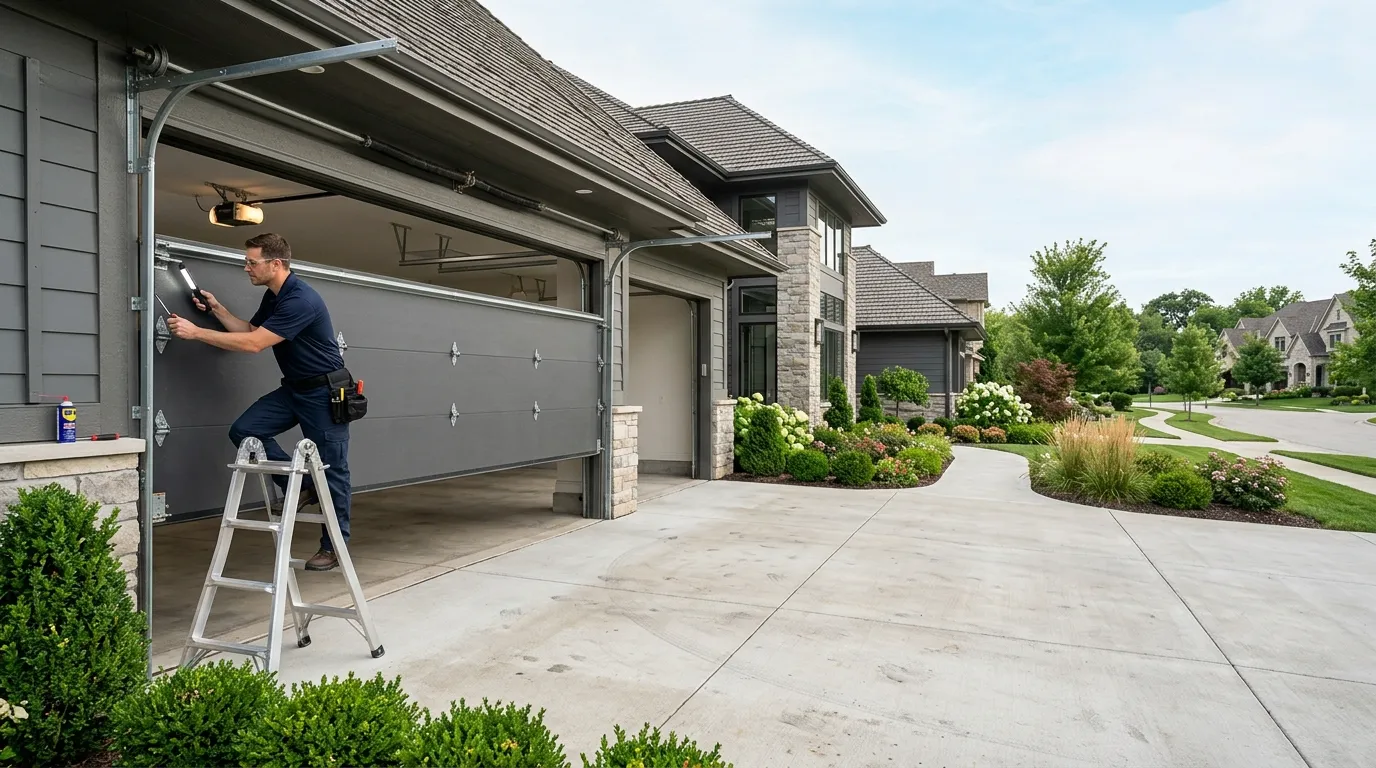
The door starts fine, then stops halfway. Or it opens with a bang and a loud metallic pop, and afterward the opener strains to lift it at all - you can hear the motor working harder than it used to. Sometimes it's quieter: the door just won't budge, and when you pull the emergency release and lift by hand, it feels twice as heavy as it should. That heaviness is the tell. A garage door on a working torsion spring should feel nearly weightless when balanced. When it doesn't, the spring has lost tension, cracked, or already let go.
In homes built across the 1938 to 2005 range that make up most of this area, with a big share from the 1960s and 70s, that spring is often original or a first replacement decades old. It was sized for a lighter, thinner door than what may be on the opening now, or it's simply outlived its wind cycles. Add a cold snap and the steel contracts, the old lubricant thickens, and a spring that was marginal in October gives out in January. If your opener is grinding, chirping, or reversing itself before the door fully closes, that's usually the same failure showing up through the motor instead of the coil.
Two things stack up in this area: the age of the housing and the winters. Housing stock across the 30-plus named areas in the service territory - Cherry Creek, Meridian, Grand View Estates, Foxfield, Stonegate, and the rest - mostly dates from the 1960s and 70s, with the broader range running 1938 to 2005. Garages from that era were built with torsion springs and track hardware that were standard for their time but aren't rated the same way modern doors are, and after 40 or 50 years of daily cycles, fatigue failure is normal, not a defect.
The climate is the second factor. This region sits in a severe cold band, and steel behaves differently at 10°F than at 60°F. Torsion springs lose a measurable amount of lift capacity in hard cold, cables stiffen, and rollers that were already worn start binding in the track instead of rolling through it. That's why so many repair calls cluster right after the first real cold snap of the season - it's not that the door broke overnight, it's that the cold finally exposed wear that had been building for years. Homes on original steel doors from the older end of that build range are the ones we see this on most.
Most calls for this symptom come down to one of three things: a broken or unwound torsion spring, worn cables that have started to fray at the drum, or a bent track that's binding the rollers. We check the balance first - unplug the opener, lift by hand, see where it wants to fall or stick. That tells us whether the opener is fighting a mechanical problem upstream, which it almost always is.
Spring replacement means matching wire size, coil length, and wind direction to the actual door weight, not just swapping in whatever's closest. On older doors from the 1960s-70s stock common here, that sometimes means upgrading to a heavier spring than the original, because the door itself may have been replaced with a heavier insulated model over the years while the spring never was. Cables get replaced in pairs, not one at a time - a mismatched pair is its own failure waiting to happen. Track work usually means realigning brackets rather than replacing the whole rail, unless the metal itself is creased.
One limitation worth saying plainly: if the spring size or drum isn't a stock item, parts can take a few extra days to source. We won't guess on a spring size to save a trip - a wrong-rated spring is a hazard, not a fix.
Torsion springs are under enough stored tension to break a bone or worse if the winding bar slips, and that risk doesn't go down because the door is old - if anything it goes up, since decades-old anchor brackets and rusted set screws fail more easily than new ones. This is the one repair on a garage door we'd tell anyone to leave alone regardless of how handy they are.
What you can reasonably check yourself: the balance test described above (door unplugged, lifted by hand, watching where it binds), whether the rollers are visibly worn or cracked, and whether the tracks are bolted tight to the wall brackets. If the door feels heavy, slams, or the opener strains, that's diagnostic information worth having ready when you call - it saves a visit. But winding, unwinding, or replacing a torsion spring, or straightening a bent track under load, is not a weekend project. The stored energy in a wound spring is the same whether the house is five years old or fifty, and on the older stock common through this area, corroded hardware makes the wrong move even less forgiving.
Steel loses some of its lift capacity in hard cold, and a spring that was already worn from decades of cycling has less margin to begin with. In this area's severe cold band, that combination is common - the cold doesn't cause the wear, it just exposes a spring that was already near the end of its life.
It's possible, especially in homes from the 1960s-70s that make up most of the housing stock here. If no one has record of a replacement, treat a torsion spring that old as due, whether or not it's showing symptoms yet.
No. A worn torsion spring doesn't fail from lack of lubrication - it fails from metal fatigue after thousands of wind cycles. Lubricating the coil can quiet noise temporarily but won't restore lost tension or prevent a break.
Unplug the opener and lift the door by hand. If it's heavy, drops on its own, or feels uneven, the spring or cables are the problem - the opener is just the part that's straining to compensate.
Call now or request a free quote - same-day service on most repairs, upfront written pricing.