Centennial, CO · Garage Door Service
Serving Ponderosa Park's 1990s-era homes, 18 miles from our Centennial base, with repairs matched to newer torsion systems and steel-insulated doors.
Ponderosa Park sits about 18 miles out from our Centennial base, and the work we do out here looks different from the older parts of the service area. Most houses went up around 1992, well after the 1938-2005 range you'll find across the wider territory, and that later build date shapes what breaks. We're replacing worn rollers and re-tensioning torsion springs on doors that are 25 to 30 years old, not rebuilding the older side-mounted extension setups you find in the 1960s and 70s pockets closer in. Openers out here are more likely to be chain or belt-drive units from a couple of upgrade cycles ago rather than original hardware, so a service call is usually about replacing a failing logic board or a stripped gear, not chasing down obsolete parts. We don't keep a truck stationed in Ponderosa Park - every job means the drive out from Centennial, so we bundle diagnosis and repair into one visit whenever the part is something we carry.
With roughly 1,265 households and a median income around $133,425, Ponderosa Park skews newer and a bit more affluent than the service area average, where median household income runs closer to $116,838 across all 58,186 owner-occupied houses we cover. The 1992 median build year puts most garages here on double-car steel sectional doors with factory-installed torsion springs rather than the older extension-spring, single-panel doors you'd find in a neighborhood built decades earlier. That later construction date also usually means better wall insulation and tighter framing tolerances around the door opening, which matters when a door starts sticking or dragging along one track.
A door built to 1992-era standards uses hardware sized differently than what you'd find in a house from the 1960s or 70s. Torsion springs on these doors are usually a standard size we stock, which keeps most spring jobs to a single visit instead of a special order. The steel panels from this era typically have foam-core insulation, which matters here - the region sits in a severe cold climate band, and a door that's lost its seal or has a cracked bottom weatherstrip will let a lot of cold air into an attached garage. We see more opener-side failures than structural door failures on houses this age: circuit boards, drive gears, and safety sensors wear out well before the door panels or track do. One honest limit - if your opener is an odd or discontinued model from that early-90s stretch and the control board has failed, the replacement board can have a real lead time, and sometimes a full opener swap ends up cheaper and faster than waiting on the part.
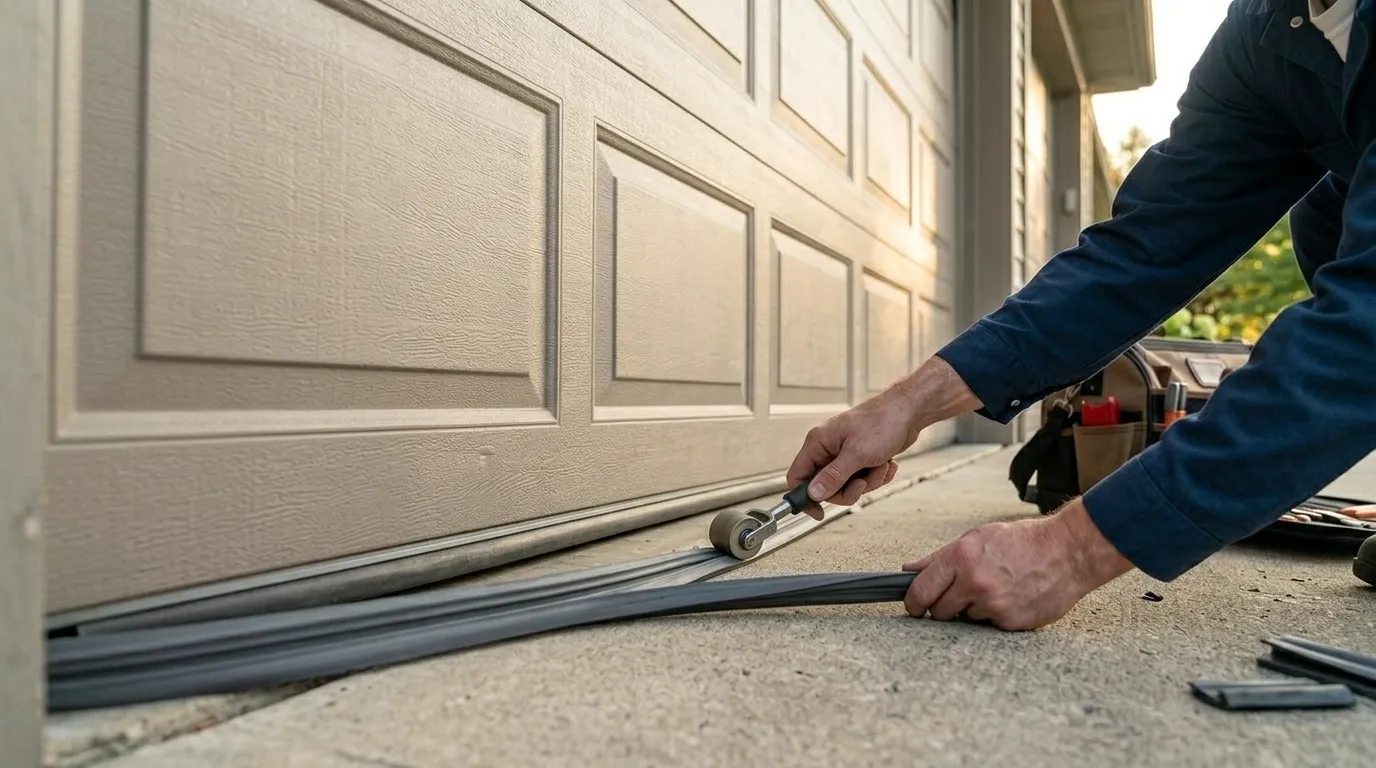
Most Ponderosa Park calls are opener trouble: a unit that runs but won't close all the way, a remote that stopped talking to the receiver, or a door that reverses for no visible reason. Torsion spring replacement comes up too, usually on the original spring from 1992 or so finally giving out after three decades of cycles. Because the doors here are steel sectional rather than older wood panel, we don't get many calls about rot or warped panels the way we might closer to Centennial's older housing stock. Cold-weather calls tick up in winter - stiffened lubricant, a torsion spring that's lost tension in the cold, or weatherstripping that's shrunk and pulled away from the frame. We travel out from Centennial for every one of these, so a same-day visit depends on the day's route, not a local crew waiting nearby.
No. We work out of Centennial and drive out to Ponderosa Park, about 18 miles, for each job. We don't keep a depot or stationed truck in the area, so scheduling depends on the day's route rather than a local presence.
Yes. Most homes here were built around 1992, later than the 1938-2005 range across the wider territory. That means steel sectional doors with factory torsion springs are typical, rather than the older extension-spring or wood-panel doors found in 1960s and 70s neighborhoods.
Opener issues top the list - failing circuit boards, worn drive gears, and sensor problems on units that are 20 to 30 years old. Torsion spring replacement on original 1992-era springs is the other common call, especially as winter cold adds strain.
Usually, since most doors from that build era use standard torsion spring sizes we carry. Openers are the exception - some discontinued control boards from the early 90s have a real lead time, and a full opener swap can end up faster than waiting on a specific part.
Call now or request a free quote - same-day service on most repairs, upfront written pricing.