Centennial, CO · Garage Door Service
Stonegate homes went up mostly around 1997, later than the rest of Centennial's coverage area. That means different springs, different openers, different failure points.
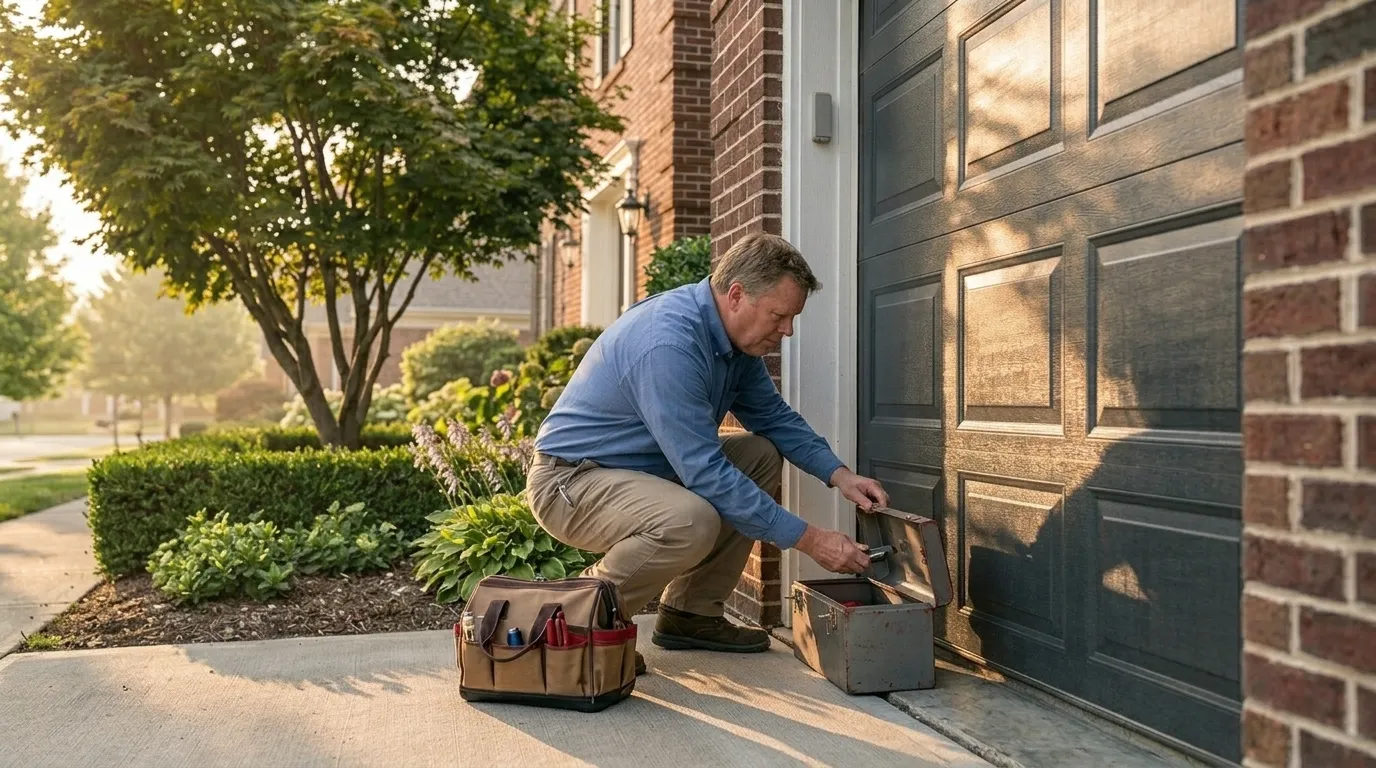
Stonegate sits about 5 miles from our Centennial base, and the calls we get from this neighborhood skew younger than what we see elsewhere in the service area. The median home here was built around 1997, roughly two decades newer than the 1978 median across the wider coverage footprint. That gap matters. A door built in 1997 is old enough to need its second or third opener and its second set of springs, but it isn't fighting the same rot, warp, or obsolete hardware you find on a 1960s track system. Most of what we do out here is opener replacement, spring swaps on doors that have simply worn out their first set, and sensor or circuit board issues on openers that are showing their age. We're not chasing rust-through panels or hand-cranked doors from this stretch the way we sometimes do elsewhere.
With about 3,272 households and a median income of $157,021, Stonegate is a newer, higher-income pocket inside a coverage area that otherwise centers on housing built between 1938 and 2005 with a median around 1978. Most of the surrounding 30 named areas we cover carry 1960s and 70s stock. Stonegate breaks from that pattern - it's a late-90s build wave, which usually means steel sectional doors on standard torsion springs, factory openers with basic safety sensors, and insulated panels that were already code-standard by the time these homes went up. The severe cold winters this region sees still stress hardware regardless of the build year, but the failure points here tend to be mechanical wear rather than structural decay.
Because Stonegate's housing stock is newer, the doors themselves are usually in decent shape - it's the moving parts that give out first. A torsion spring rated for roughly 10,000 cycles installed when these homes were built in the late 1990s is well past its expected life today, and that's the single most common repair call we get from this part of the coverage area. Openers from that era are also reaching the end of their run; chain-drive units from the late 90s don't have the safety reversal sensitivity that current code requires, so when one fails, we're often replacing it outright rather than patching it. One honest limitation: if your opener predates 1993 safety-sensor requirements, we won't just swap the motor and leave the old sensors in place - that's not a repair we'll do halfway.
Given the income level and age of the housing in Stonegate, most jobs we run here are planned replacements rather than emergency fixes - opener upgrades, spring replacement before a full failure, or new insulated panels swapped onto still-solid steel doors. We see fewer of the structural repairs common in older parts of the service area, like warped wood panels or track systems bent from decades of settling. What we do see more of is homeowners replacing a working-but-tired opener for quieter operation or smart-home compatibility, since these houses were built with the infrastructure to support it. We travel out from Centennial for these calls; we don't keep a depot in Stonegate, so we schedule the visit rather than showing up same-hour.
Yes. Most homes here were built around 1997, compared to a median of 1978 across the wider service area we cover. That means Stonegate doors are more likely to need spring or opener replacement than structural repair, since the housing stock is newer and less prone to the wood rot or warping seen in older sections.
About 5 miles from our location in Centennial. We travel out for scheduled jobs rather than keeping a depot in Stonegate itself, so we set an appointment window instead of promising an immediate same-hour arrival.
If your Stonegate home was built around the median year of 1997, an original chain-drive opener is likely near or past its expected service life and may not meet current safety-sensor standards. We'll tell you plainly if replacement makes more sense than a patch repair - we won't just swap a motor and leave outdated sensors in place.
Both, depending on the door. Steel sectional doors common in this area's late-90s builds often still have solid panels even when the springs or opener have failed, so we'll replace only what's worn rather than the whole door, when that's the honest call.
Call now or request a free quote - same-day service on most repairs, upfront written pricing.